LTO Violation Check: Complete Guide to Traffic Penalties and Fines in the Philippines 2026
Getting pulled over is stressful. But what comes next—figuring out what you owe, where to pay, and whether you have unpaid tickets can be even worse. An LTO violation check lets you see all traffic penalties tied to your license or vehicle, so you can settle them before they escalate into license suspension or vehicle impoundment.
The Land Transportation Office recorded over 1.2 million traffic violations in Metro Manila alone during 2025, according to government data. That number keeps climbing as more CCTV cameras and roadside checkpoints get installed. Knowing how to check your LTO violations, what each penalty costs, and how to pay them can save you time, money, and the headache of dealing with piled-up fines.
This guide walks you through everything: how to perform an LTO violation check online and in person, the complete fine schedule for 2026, payment options, and what happens if you ignore a ticket. You’ll also learn about specific violations like no helmet, excess passengers, missing side mirrors, and RFID-related penalties on expressways.
What Is an LTO Violation Check?
An LTO violation check is a process that shows all recorded traffic penalties linked to your driver’s license or vehicle plate number. You can use the LTO Portal or visit a physical LTO office to pull up this information. The system displays violation type, date, location, and the fine amount you need to settle.
The database pulls data from multiple sources: traffic enforcers who issue tickets on the road, CCTV systems on expressways, and reports from local government units. When you check, you get a consolidated list of everything the LTO has on file under your name or plate number.
Why You Need to Check Regularly
Some violations don’t reach you right away. CCTV tickets, for example, get mailed to the registered address on file. If you moved and didn’t update your LTO records, you won’t even know you owe money until you try to renew your license or registration.
Unpaid violations block your transactions. You can’t renew a license, transfer ownership of a vehicle, or get clearance certificates if you have outstanding fines. Checking every few months keeps you clear and avoids last-minute surprises.
How Do I Check My LTO Violation?
You have two main ways to check: online through the LTO Portal, or in person at an LTO office. Online is faster, but not all violations appear immediately in the system. In-person checks let you speak with staff if something looks wrong.
Online LTO Violation Checker
The official LTO Portal offers a violation checker tool. You’ll need your driver’s license number or your vehicle’s plate number. Here’s how to use it:
- Go to the LTO Portal website.
- Click on the “Violation Inquiry” or “Check Violations” section.
- Enter your license number or plate number in the search field.
- Click “Search” and wait for results to load.
- Review the list of violations, including dates, locations, and amounts.
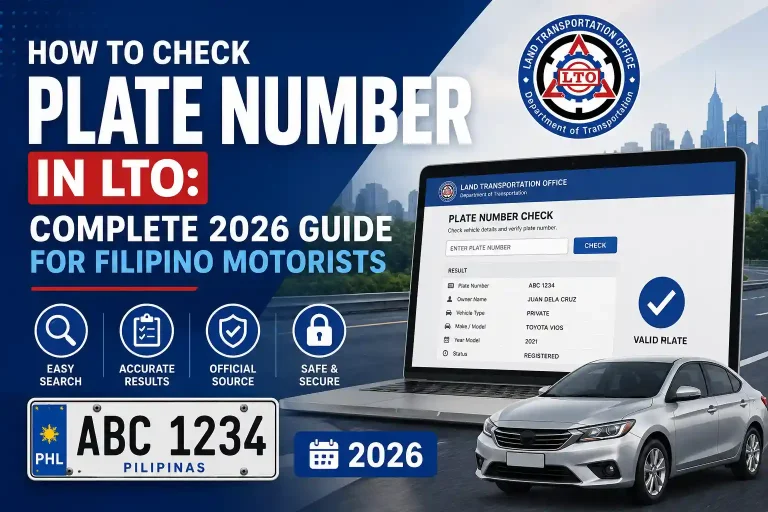
If you want to know how to check plate number in lto, the same portal lets you verify registration details and active violations tied to that plate.
In-Person Violation Check at LTO Offices
Visit any LTO district or extension office. Bring a valid ID and your driver’s license or vehicle registration. Ask the clerk to pull up your violation records. They’ll print a summary or show you the details on their screen.
This method works well if you’re already at LTO for another transaction, or if the online system shows incomplete data. Staff can also explain violations you don’t recognize.
LTO Plate Number Violation Check
If you don’t have your license handy, you can search using your vehicle’s plate number instead. This pulls up violations tied to the vehicle itself useful if someone else was driving when the ticket was issued, or if you’re buying a used car and want to check for unpaid penalties.
What Are the LTO Violations and Penalties for 2026?
LTO traffic violations fall under Republic Act 4136 (Land Transportation and Traffic Code), the Anti-Distracted Driving Act, and various local ordinances. Fines range from ₱1,000 for minor offenses to ₱10,000 for serious violations. Repeat offenses double or triple the base fine, and some violations carry license suspension or vehicle impoundment.
Below is the complete list of common LTO violations and their corresponding fines for 2026.
| Violation | First Offense | Second Offense | Third Offense |
|---|---|---|---|
| Driving without a license | ₱3,000 | ₱5,000 | ₱10,000 + impounding |
| Expired driver’s license | ₱3,000 | ₱5,000 | ₱10,000 |
| Driving without registration | ₱10,000 | ₱20,000 | Impounding |
| No helmet (motorcycle) | ₱1,500 | ₱3,000 | ₱5,000 |
| Excess passenger (motorcycle) | ₱1,000 | ₱2,000 | ₱5,000 |
| No seatbelt | ₱1,000 | ₱2,000 | ₱5,000 |
| Distracted driving (mobile phone use) | ₱5,000 | ₱10,000 | ₱15,000 + 3-month suspension |
| Overspeeding | ₱1,200 | ₱2,000 | ₱3,000 |
| Reckless driving | ₱2,000 | ₱3,000 | ₱5,000 + 1-month suspension |
| Illegal parking | ₱1,000 | ₱2,000 | ₱5,000 |
| No side mirror | ₱1,000 | ₱2,000 | ₱5,000 |
| Defective headlight | ₱1,000 | ₱2,000 | ₱5,000 |
| Driving under the influence (DUI) | ₱10,000 + 12-month suspension | ₱20,000 + revocation | Permanent revocation |
| Smoke belching | ₱2,000 | ₱4,000 | ₱6,000 |
| Improper dress code (slippers, sleeveless) | ₱1,000 | ₱2,000 | ₱5,000 |
| No plate number or obscured plate | ₱5,000 | ₱10,000 | Impounding |
| Failure to carry OR/CR | ₱3,000 | ₱5,000 | ₱10,000 |
LTO Helmet Violation
Riding a motorcycle without a helmet costs ₱1,500 for the first offense. That includes both driver and passenger. If the passenger isn’t wearing one, the driver gets the ticket.
Second offense jumps to ₱3,000, and a third violation hits ₱5,000. Enforcers also check helmet quality—old, cracked, or toy helmets don’t count. The helmet must meet Department of Trade and Industry standards and carry a PS or ICC sticker.
Excess Passenger Violation Fee LTO
Motorcycles can legally carry one passenger. Bring more than that, and you’ll pay ₱1,000 for the first offense. The rule applies whether you’re carrying two passengers or three.
Repeat offenses double the fine to ₱2,000, then ₱5,000 on the third. Enforcers also cite you if the passenger is too young—children under 18 or those who can’t reach the foot pegs aren’t allowed.
LTO Seatbelt Violation
All passengers in cars must wear seatbelts, front and back. First offense costs ₱1,000. The driver gets the ticket even if a passenger refuses to buckle up.
Second and third offenses cost ₱2,000 and ₱5,000 respectively. Enforcers check this during random checkpoints and when pulling you over for other violations.
LTO Side Mirror Violation
Motorcycles and cars must have functional side mirrors on both sides. Missing one, or having a cracked mirror, costs ₱1,000 on the first offense. Repeat violations go up to ₱2,000 and ₱5,000.
Some riders remove mirrors to fit through tight traffic. That doesn’t exempt you. Enforcers cite you on sight.
LTO Headlight Violation
Driving with a broken or missing headlight costs ₱1,000. That includes dim bulbs, cracked lenses, or headlights that only work intermittently. Enforcers check this during night patrols and safety inspections.
Second and third offenses rise to ₱2,000 and ₱5,000. Some cities also cite you for using colored headlights or installing HID kits without proper housings.
Dress Code Violation LTO
Motorcycle riders can’t wear slippers, sleeveless shirts, or shorts. First offense costs ₱1,000. The rule exists for safety—slippers slip off, and bare skin offers no protection in a crash.
Repeat offenses cost ₱2,000 and ₱5,000. Enforcers enforce this strictly in Metro Manila and during holiday operations.
LTO Motorcycle Violation
Motorcycles face additional rules beyond helmets and passengers. You can’t modify the muffler, install loud exhausts, or remove the rear fender. Each of these costs ₱1,000 to ₱5,000 depending on offense count.
Riding on sidewalks, counterflowing, or using the bus lane also gets you cited. Fines range from ₱1,000 to ₱3,000.
How Much Are LTO Violation Fees in 2026?
LTO violation fees depend on the offense and how many times you’ve committed it. First-time violations start at ₱1,000 for minor issues like seatbelt or helmet infractions. Serious violations like driving without a license or DUI start at ₱3,000 and go up to ₱10,000 or more.
Repeat offenses double or triple the base fine. Third offenses often come with license suspension or vehicle impoundment. Some cities add local surcharges on top of the LTO base fine, so the total amount you pay can vary by location.
LTO Price Violation Breakdown
Minor violations (₱1,000 – ₱2,000): No helmet, no seatbelt, dress code, side mirror, headlight, illegal parking.
Moderate violations (₱2,000 – ₱5,000): Reckless driving, overspeeding, smoke belching, distracted driving (first offense).
Major violations (₱5,000 – ₱10,000+): Driving without a license, no registration, distracted driving (repeat), DUI, no plate number.
No Helmet Violation Fee LTO
First offense: ₱1,500. Second offense: ₱3,000. Third offense: ₱5,000. The fee applies per violation, not per person. If both driver and passenger lack helmets, you get cited once, not twice.
LTO Violation Fee 2026 (General)
Base fines haven’t changed much from 2025 to 2026, but enforcement has tightened. More CCTV cameras on national roads and expressways mean more automated tickets. Expect fines to show up weeks after the violation occurred, especially if you pass through toll gates without proper RFID setup.
What Are LTO Traffic Violations 2026?
LTO traffic violations cover anything that breaks road safety rules or vehicle regulations. These include moving violations like speeding and reckless driving, equipment violations like broken lights or missing mirrors, and administrative violations like expired registration or no license.
Enforcement happens through traffic enforcers, CCTV cameras, and roadside checkpoints. Some violations get cited on the spot with a ticket handed to you. Others—like CCTV violations—get mailed to your registered address or show up when you check online.
Moving Violations
These happen while you’re driving: overspeeding, running a red light, illegal overtaking, counterflowing, or reckless driving. Fines range from ₱1,200 to ₱5,000 depending on severity and repeat offenses.
Equipment Violations
Your vehicle must meet safety standards: working headlights, taillights, turn signals, side mirrors, horn, and brakes. Missing or broken equipment gets you fined ₱1,000 to ₱5,000.
Administrative Violations
These involve paperwork: driving without a license, expired license, no vehicle registration, or failure to carry OR/CR. Fines start at ₱3,000 and can reach ₱10,000 with impounding.
How to Pay LTO Traffic Violation Fines
Once you know what you owe, you can pay at LTO offices, authorized payment centers, or online through partner platforms. Settling fines quickly avoids late penalties and keeps your records clean for renewals.
Payment at LTO Offices
Bring your violation ticket (if you have it), your driver’s license, and cash or a debit card. Go to the cashier, present your ticket or provide your license number, and pay the amount shown. You’ll get an official receipt. Keep that receipt it’s proof of payment.
Online Payment Options
Some LTO districts partner with Bayad Center, SM Bills Payment, or GCash for online payments. Log into their platform, select “LTO Violation Payment,” enter your license or plate number, and follow the prompts. You’ll receive a confirmation receipt via email or in the app.
Not all violations appear in online payment systems right away. CCTV violations can take weeks to upload. If you can’t find your violation online, pay in person instead.
Payment Centers and Banks
Authorized centers like SM Business Service Centers, Bayad Center, and some bank branches accept LTO violation payments. Bring your ticket and ID. The cashier will process the payment and give you a receipt.
Tip:
Always keep digital and physical copies of your payment receipts. The LTO database can lag, and having proof avoids double payment or disputes during renewals.
What Happens If You Don’t Pay LTO Violations?
Ignoring LTO violations piles up problems. Unpaid fines block license and registration renewals. The LTO won’t process your transaction until you settle all outstanding penalties. You can’t transfer vehicle ownership, get clearance certificates, or apply for a driver’s license upgrade either.
License Suspension
Accumulating multiple violations or failing to pay serious offenses like DUI or reckless driving can lead to license suspension. The LTO sends a notice, and if you don’t respond, they suspend your license for one to 12 months depending on the violation.
Vehicle Impoundment
Major violations like driving without registration or using fake plates can result in immediate vehicle impoundment. You’ll need to settle the fine, pay towing and storage fees, and prove your vehicle is legally registered before you get it back.
Legal Action
In extreme cases—like repeated DUI or reckless driving causing injury the LTO can file charges. That escalates from a simple fine to a criminal case with court hearings, larger fines, and potential jail time.
How to Avoid LTO Traffic Violations
Prevention beats paying fines. Follow these habits to stay clear of tickets and keep your driving record clean.
Keep Your Documents Updated
Renew your license and registration before they expire. Update your address with the LTO when you move so violation notices reach you. Always carry your OR/CR and driver’s license when driving.
Follow Road Rules
Wear your seatbelt. Use your helmet if you ride a motorcycle. Don’t use your phone while driving. Respect speed limits. Signal before turning. These basic rules prevent most violations.
Maintain Your Vehicle
Check your lights, mirrors, horn, and brakes regularly. Replace worn parts before they fail. A quick inspection before each ride saves you from equipment violation tickets.
Use the LTO Violation Check Regularly
Check your violation status every few months, especially if you drive on expressways or through areas with heavy CCTV coverage. Catching violations early prevents them from snowballing into license suspension.
RFID and Expressway LTO Violations
Expressways have their own set of violations tied to RFID toll systems and traffic cameras. These violations get recorded automatically and sent to the LTO database. You won’t get a physical ticket on the road—instead, they show up when you check online or try to renew.
RFID Violations
Driving through an RFID-only lane without a working RFID sticker costs ₱1,000 for the first offense. Repeat offenses go up to ₱5,000. Some expressways also fine you for insufficient RFID balance or using the wrong lane.
CCTV Violations on Expressways
Cameras catch speeding, illegal lane changes, and tailgating. Fines range from ₱1,000 to ₱3,000. The violation notice gets mailed to the address on your vehicle registration, so keep that information current.
LTO Violation Check for Second-Hand Car Buyers
Buying a used car? Run an LTO plate number violation check before closing the deal. Unpaid violations transfer with the vehicle. If the previous owner didn’t settle their fines, you’ll inherit them when you register the car under your name.
How to Check Before Purchase
Ask the seller for the plate number. Use the LTO Portal to run a violation check. If violations appear, negotiate with the seller to settle them before transfer, or factor the cost into your offer.
Transfer of Liability
Once you complete the deed of sale and transfer of ownership, the LTO shifts liability to you. Any violations issued after the transfer date become your responsibility. Violations before the transfer remain with the previous owner—unless they weren’t paid, in which case they block your registration.
Frequently Asked Questions


Final Thoughts
Running an LTO violation check regularly keeps you ahead of fines and prevents last-minute problems during renewals. The process is simple: use the LTO Portal, enter your license or plate number, and review your records. Pay any fines you owe immediately to avoid late penalties, license suspension, or vehicle impoundment.
Knowing the 2026 fine schedule helps you budget for penalties and understand what each violation costs. From no helmet and seatbelt fines to serious offenses like DUI, the LTO enforces these rules to improve road safety. Follow road rules, maintain your vehicle, and keep your documents updated to avoid violations altogether.
If you’re buying a used car, check for unpaid violations before signing. If you think a violation is wrong, file a protest with the LTO. And always keep copies of your payment receipts—the system can lag, and proof protects you from disputes.
Stay informed, check your status often, and settle fines on time. That keeps your license active, your registration current, and your driving record clean.