LTO Renewal Guide 2026 to Driver’s License and Car Registration in the Philippines
Whether your driver’s license is about to expire or your car registration is due this month, LTO renewal is one of the most important things you need to stay on top of as a Filipino motorist. Skipping it means penalties, fines, and even impoundment. But when you know exactly what to do, the whole process becomes much less stressful.
This complete guide covers everything you need to know about LTO renewal in 2026, from requirements and fees to step-by-step instructions for both driver’s license renewal and car registration renewal. So, continue with us!
What Is LTO Renewal?
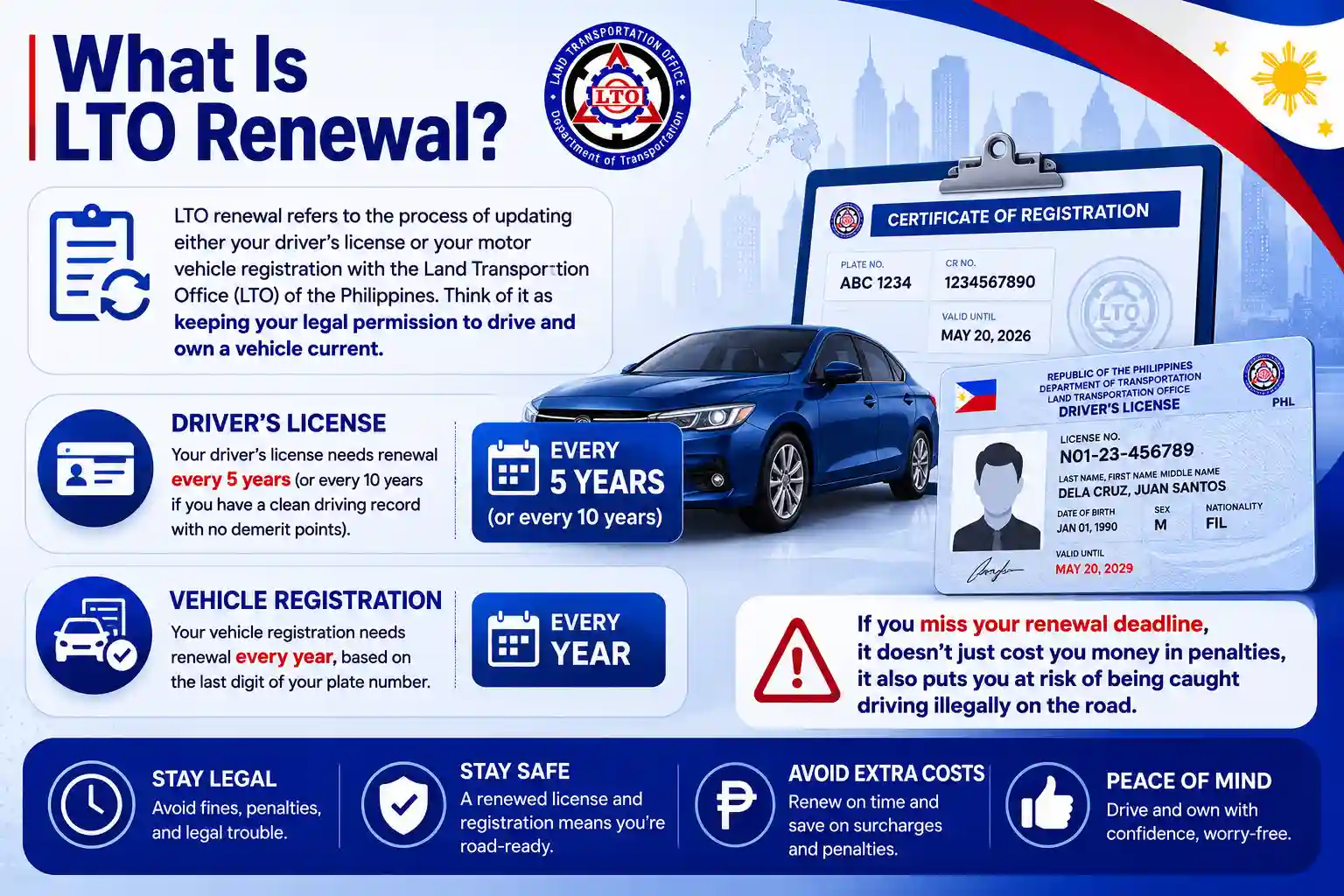
LTO renewal refers to the process of updating either your driver’s license or your motor vehicle registration with the Land Transportation Office (LTO) of the Philippines. Think of it as keeping your legal permission to drive and own a vehicle current.
- Your driver’s license needs renewal every 5 years (or every 10 years if you have a clean driving record with no demerit points).
- Your vehicle registration needs renewal every year, based on the last digit of your plate number.
If you miss your renewal deadline, it doesn’t just cost you money in penalties, it also puts you at risk of being caught driving illegally on the road.
LTO Driver’s License Renewal
If you have your driver’s license and it’s about to expire you need to renew it. You must renew your license when it gets damaged or you lose it. Here is the complete guide on your renewal of driver’s license like who needs it, its fees, requirements, and even step-by-step instruction for renewal application.
Who Needs to Renew Their Driver’s License?
You need to renew your LTO driver’s license if:
- Your license is expiring within 60 days.
- Your license has already expired (you can still renew without additional late penalties, but you must settle any unpaid traffic violations first).
- You are heading abroad and want to renew up to one year early.
Important Note:
If your license has been expired for more than 2 years, you will need to retake the written and practical driving exams before you can renew.
LTO Driver’s License Renewal Requirements 2026
Before going to an LTO office, or applying for the renewal you must assemble your documents and because you need your documents during the process for your identity verification and confirm that you need license renewal. That’s why you must make sure you have the following documents:
- Original driver’s license (even if expired).
- CDE Certificate: As a proof that you completed the Comprehensive Driver’s Education (CDE) exam via the LTMS portal.
- Medical Certificate: From an LTO-accredited clinic, which includes an eye test and blood type verification; valid for 60 days from the date of issuance.
- Duly accomplished Application for Driver’s License (ADL) form
- Valid government-issued ID
Note:
As of 2026, drug testing is no longer required for standard license renewals under Republic Act No. 10586, unless you are involved in legal proceedings or an LTO officer specifically requests it.
LTO Driver’s License Renewal Fees 2026
| License Type | Validity | Fee |
|---|---|---|
| Non-Professional | 5 Years | ₱585 |
| Professional | 5 Years | ₱720 |
| Non-Professional | 10 Years (Clean Record) | ₱1,009 |
| Professional | 10 Years (Clean Record) | ₱1,244 |
Additional costs to budget for:
- Medical certificate: ₱300–₱500
- CDE online exam: ₱500–₱1,500 (varies by provider)
- LTMS service/convenience fee: ₱50–₱100
Total estimated cost for a 5-year non-professional renewal: approximately ₱1,685
How to Renew Your LTO Driver’s License?
If you have prepared your required documents and now you are ready to apply for renewal then follow the step-by-step instruction below.
Step 1: Register or Log In to the LTMS Portal
Go to portal.lto.gov.ph and log in to your account. If you don’t have one yet, click “Register Now” and enroll as an individual. Registration is free and takes about 5 minutes.
Check our complete guide and Login to your LTMS portal account.
Step 2: Complete the CDE Online Exam
Once logged in, navigate to the “E-Learning” section. Complete the 25-item Comprehensive Driver’s Education (CDE) exam. You need at least 20 correct answers to pass. After passing, print or save your CDE Certificate.
Step 3: Get Your Medical Certificate
Visit an LTO-accredited clinic for your medical exam. The clinic will upload your certificate directly to the LTMS portal. Make sure you use your certificate within 60 days of issuance, after that, it expires.
Step 4: Book Your LTO Appointment
Back on the LTMS portal, fill out the Application for Driver’s License (ADL) form online. Enter your Medical Certificate Number, then choose your preferred LTO branch and schedule an appointment. New appointment slots are released every Monday at 12:00 AM Philippine time and only cover the next 7 days, so book early.
Step 5: Pay the Renewal Fee
You can pay online through GCash, Maya, credit or debit card, or at an accredited payment partner. A ₱65 convenience fee applies for online payments. If you prefer, you can also pay at the LTO branch cashier on the day of your appointment.
Step 6: Visit the LTO Branch
On your appointment date, arrive at the LTO branch on time. Bring all your documents. You will go through:
- Document verification by an LTO evaluator
- Biometrics capture (photo, fingerprint, signature)
Your renewed driver’s license will be issued to you on the same day or within a few days, depending on the branch.
LTO Car Registration Renewal
If you own a motor vehicle car/ motorcycle you must renew its registration by the Land Transportation Office (LTO). Here is the complete information about your car registration renewal lto.
When Do You Need to Renew Your Car Registration?
Before moving towards the renewing process, you need to know when you should renew your car/motorcycle registration. Because when you have the idea that it’s the right time to renew your LO car registration, you can avoid LTO violation or late renewal penalties.
When you buy a new car you register it for the first time and this LTO registration is valid for 3 years and after that you need to renew the car registration annually. It is important for your car maintenance every year so that LTMS verifies your vehicle as roadworthy and allows it on road traffic.
LTO Registration Renewal Schedule
All motor vehicles registered in the Philippines must be renewed annually. Your renewal schedule is based on the last digit of your plate number, which tells you which month you need to renew. The second-to-last digit tells you which week of that month.
| Last Digit of Plate | Renewal Month |
|---|---|
| 1 | January |
| 2 | February |
| 3 | March |
| 4 | April |
| 5 | May |
| 6 | June |
| 7 | July |
| 8 | August |
| 9 | September |
| 0 | October |
The middle digit determines the week within that month:
- 1, 2, 3 – 1st to 7th working day
- 4, 5, 6 – 8th to 14th working day
- 7, 8 – 15th to 21st working day
- 9, 0 – 22nd to the last working day
Brand-new vehicles: Enjoy a 3-year initial registration validity for cars and 2-year validity for motorcycles. After that, annual renewal applies.
LTO Car Registration Renewal Requirements 2026
Before going to an LTO office or authorized renewal center, you have to prepare these documents:
- Original OR (Official Receipt) and CR (Certificate of Registration): Photocopies are not accepted
- Valid driver’s license
- Emission test certificate: Required for gasoline vehicles 4 years old and above, and all diesel vehicles
- CTPL (Compulsory Third-Party Liability) insurance: Now bundled into the renewal fees in most cases, but verify with your LTO branch
- Motor Vehicle Inspection Report: From an LTO-accredited inspection center
Note:
If your OR/CR is lost, you must file for reissuance at the LTO office where the vehicle was originally registered before you can renew.
LTO Car Registration Renewal Fees 2026
Fees vary depending on the type and engine size of your vehicle. Here is the estimated renewal price:
| Vehicle Type | Estimated Renewal Fee |
|---|---|
| Motorcycles | ₱1,200–₱2,500 |
| Private Cars (Under 1600cc) | ₱2,800–₱6,500 |
| SUVs & Pickups (1600–2500cc) | ₱6,500–₱10,000 |
| Large Vehicles (Above 2500cc) | ₱10,000–₱15,000+ |
Late renewal penalties:
- First 3 months late: ₱100 per month
- Months 4–6: ₱200 per month
- Beyond 6 months: ₱300 per month (capped at ₱3,000 total)
Expired registration for more than 3 months may result in heavier fines and vehicle impoundment.
How to Renew Your LTO Car Registration?
If you have prepared your documents and checked your renewal schedule then follow the step-by guide to renew your car registration:
Step 1: Get Your Emission Test Done First
First of all you have to schedule your emission test at an LTO-accredited center 1–2 weeks before your registration expiry. The test costs ₱450–₱800 and takes about 15–30 minutes. If your vehicle fails, you’ll need to repair it and retest , so give yourself enough time.
Step 2: Get CTPL Insurance
Make sure your Compulsory Third-Party Liability (CTPL) insurance is current. You can purchase this from authorized insurance providers. Many LTO branches and accredited agent banks such as Philippines National Bank (PNB), Metrobank, BDO Unibank or Landbank of the Philippines offer CTPL at the counter.
Step 3: Prepare Your Documents
Gather your original OR/CR, valid driver’s license, emission certificate, and CTPL insurance. Double-check that everything is complete before heading out, because missing documents mean a wasted trip.
Step 4: Go to an LTO Office or Authorized Renewal Center
You can renew your car registration at:
- Any LTO district office
- LTO-authorized agent banks
- Selected LTO DLRC branches inside malls
The renewal process typically takes 30–90 minutes at an LTO office or 15–30 minutes at agent banks, assuming your documents are complete.
Step 5: Pay the Renewal Fees
Present your documents at the counter, undergo vehicle inspection if required, then pay at the cashier. You can also use the LTMS portal for online payment with GCash, Maya, or a credit/debit card.
Step 6: Receive Your New OR/CR
Once payment is confirmed, your new Official Receipt and Certificate of Registration will be issued. Keep these in your vehicle at all times, you will need them at checkpoints and during future renewals.
LTO Online Renewal Process Using the LTMS Portal
If you have gathered all the required documents and information as it mentioned above and have confirmed your vehicle listing at your LTMS account. Then you can renew it online without any difficulty. Here we are sharing a complete step-by-step guide to renew your car registration online through the LTO website.
Follow the steps:
Step 1: Log In to Your LTMS Account
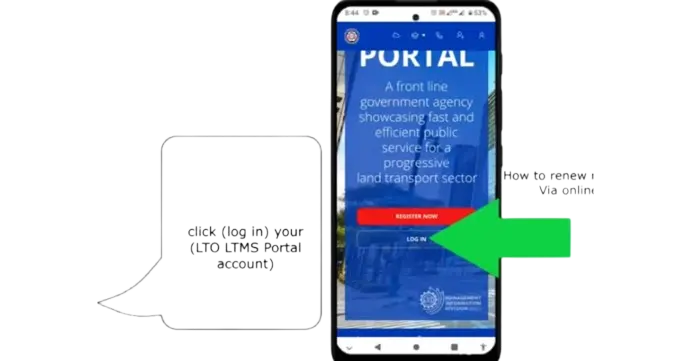
First of all you have to login your LTMS account. So, go to the official LTO website and tap on the “login”. A login form will open on your screen, enter your registered email and LTMS password. Then click “login”.
If you don’t have an account yet then click on “sign up” and follow the on-screen instruction to create your account. For a complete guide on LTO portal registration, visit our website.
Step 2: Select Vehicle Registration Renewal
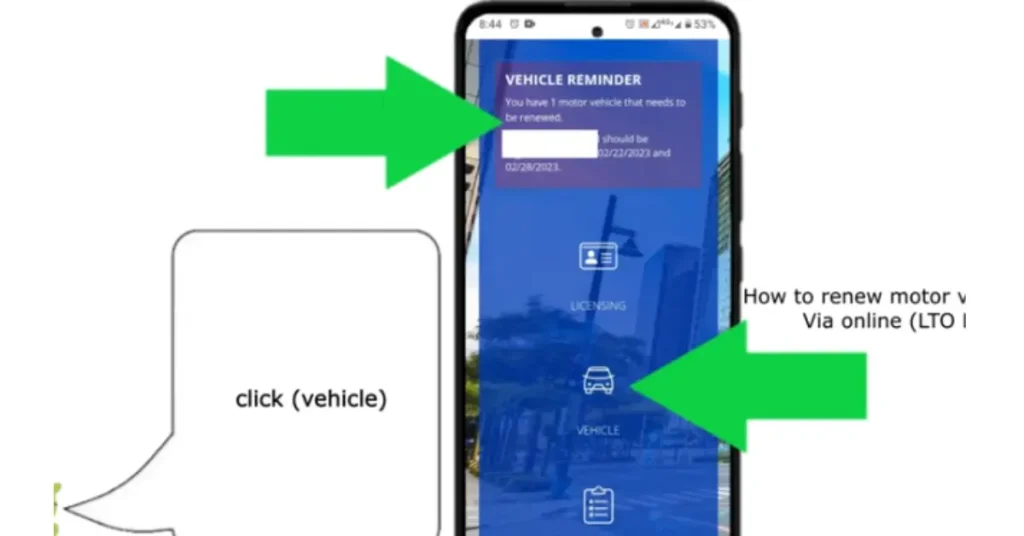
If you have successfully logged in, then click “Vehicle” from the portal’s dashboard.
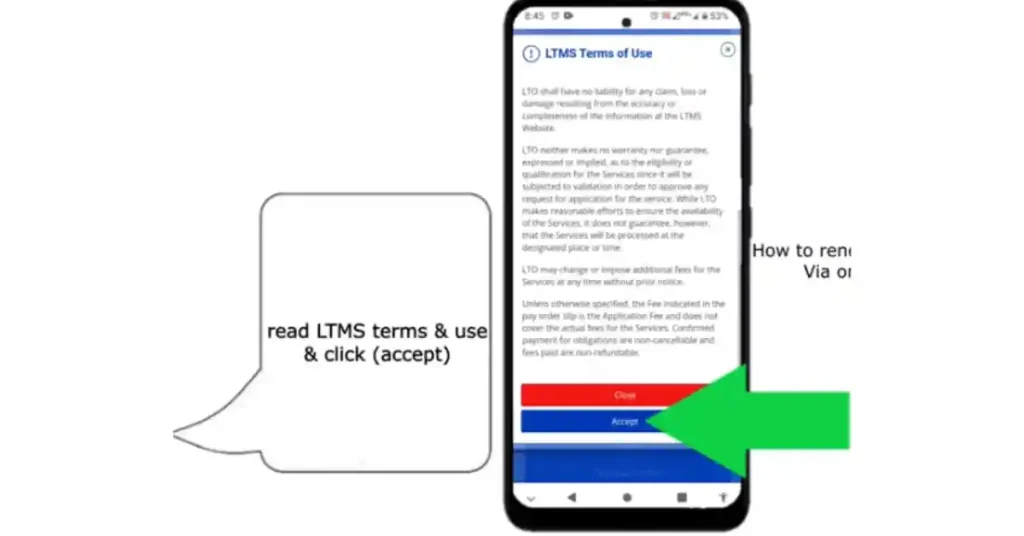
Now read the “terms of use” and tap on the “Accept” to agree.
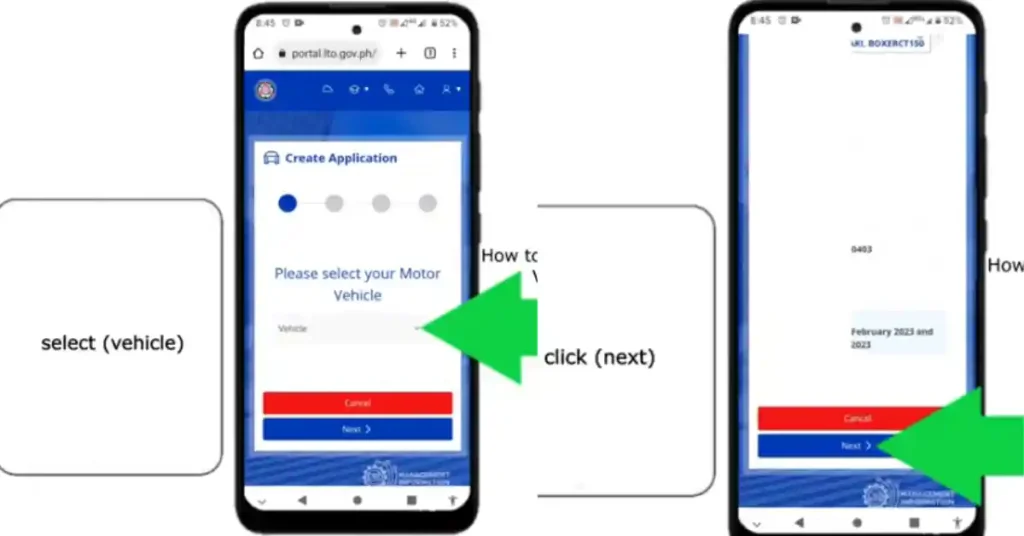
After that, choose your vehicle type like motorcyle or car and click “Next”.
Step 3: Enter Vehicle Information
Next you have to enter your vehicle’s information for which you are performing the renewal registration.
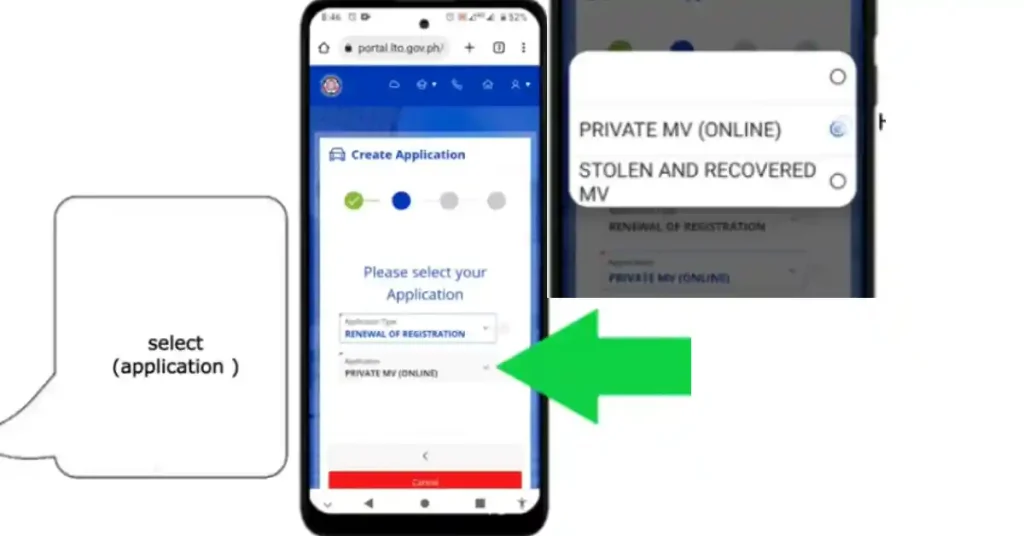
In create application form, first of all choose your “application type” as “registration of vehicle”. Then select “Renewal of Registartion”.
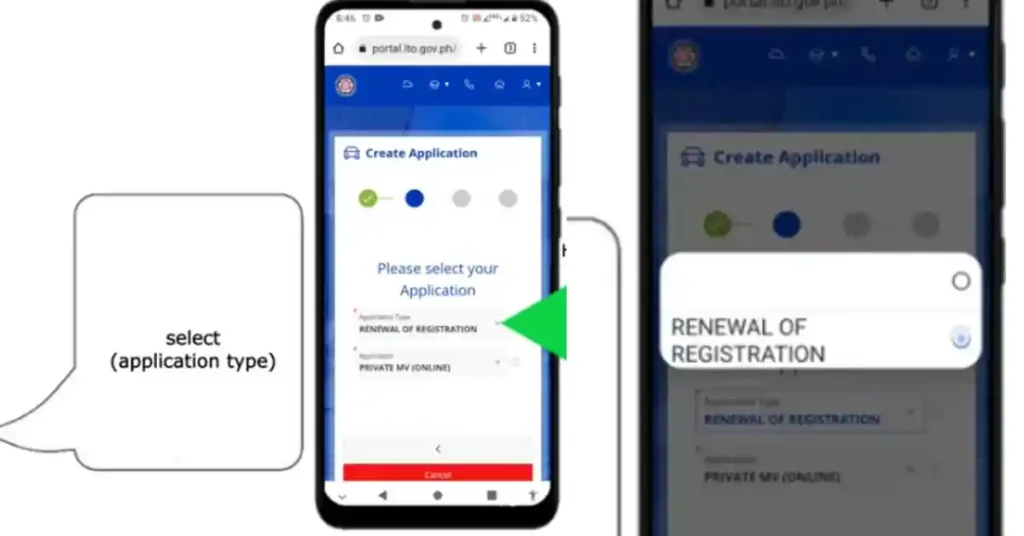
Now select application as “Private MV online” according to your need.
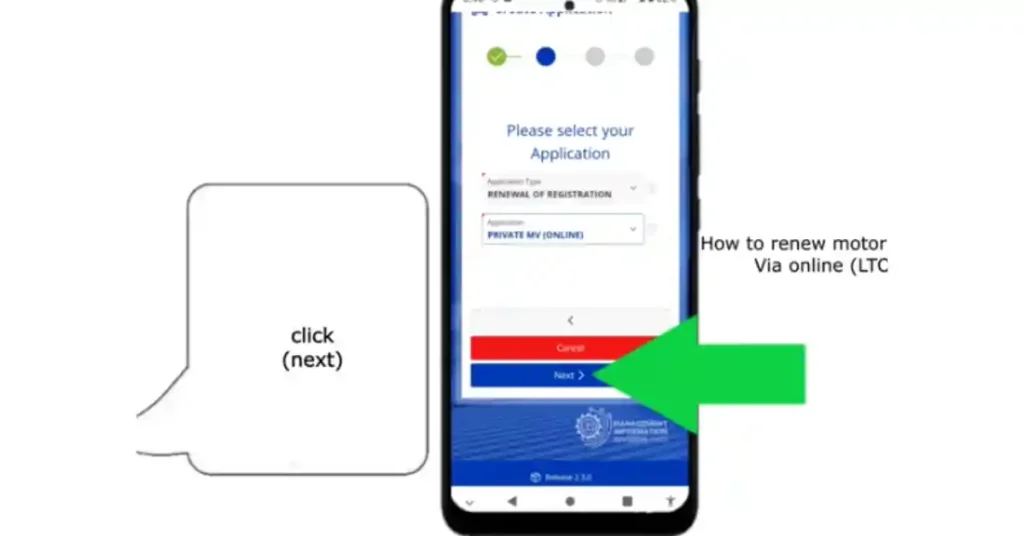
Then, click on “next” button and move to the next step.
Step 4: Complete Vehicle Inspection
Now you have to provide your required documents to verify.
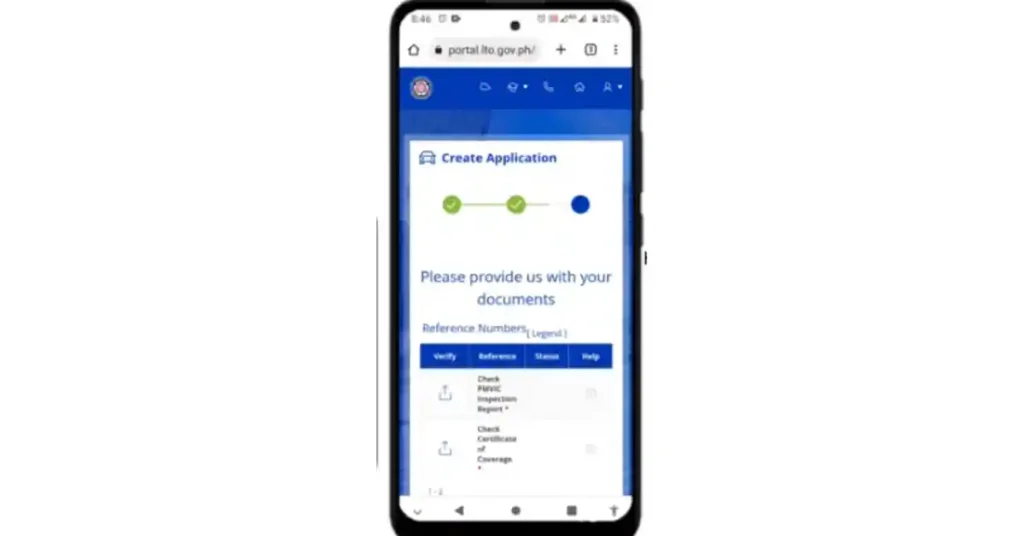
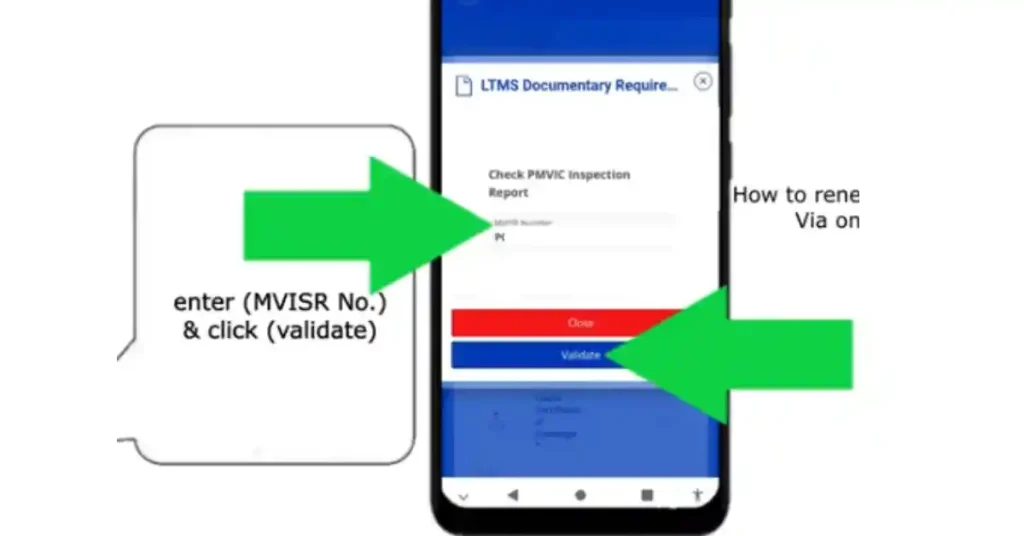
From the Verify column you have to click on the upload icon and upload your PMVIC Inspection Report.
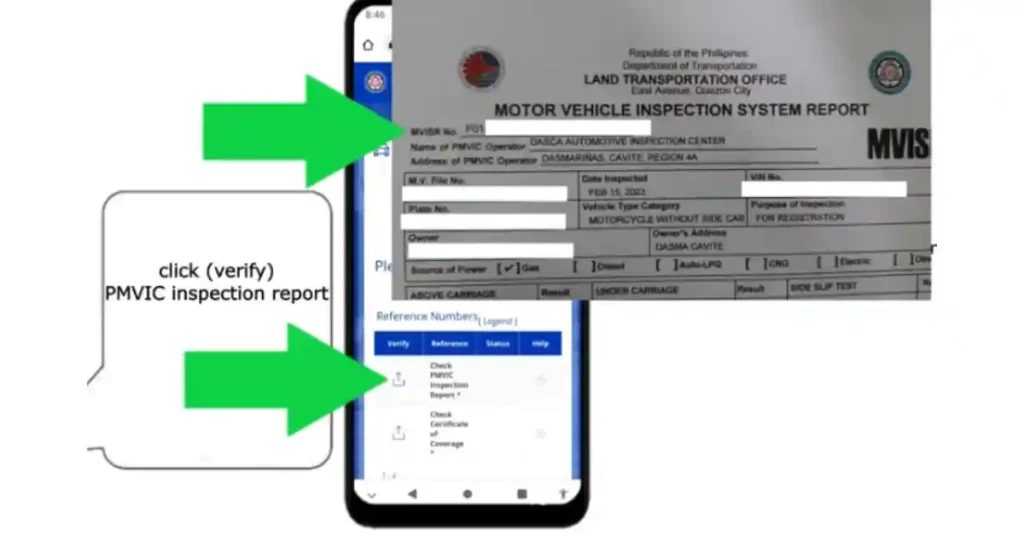
Then provide your PMVIC No. and tap on “validate”.
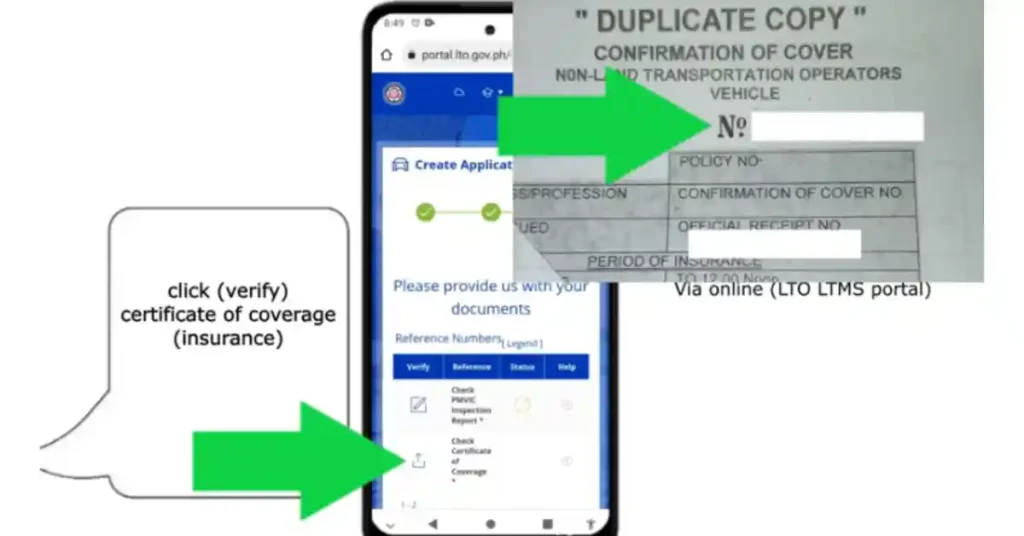
After that, upload your Certificate Of Coverage (Insurance).
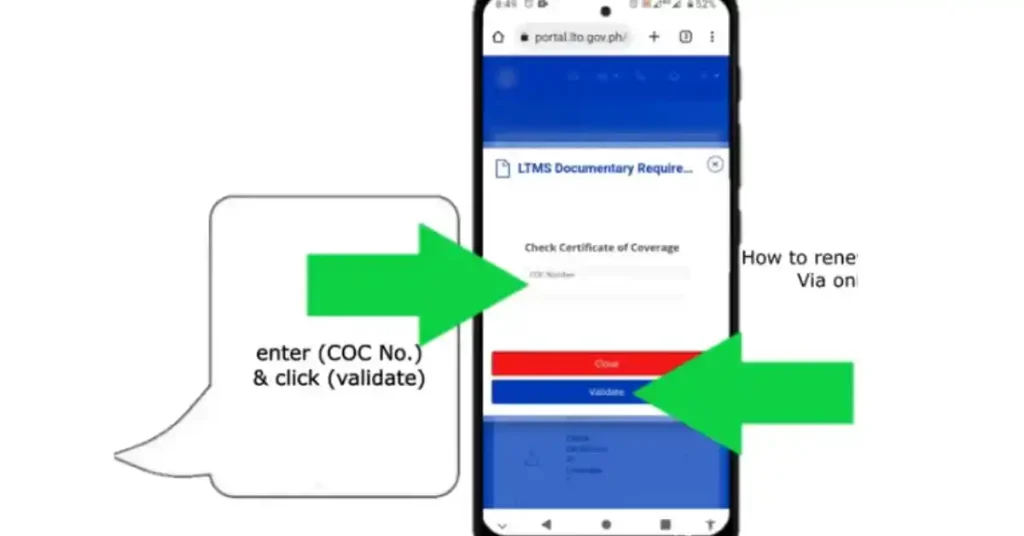
And type your COC No. and tap on “Validate” again.
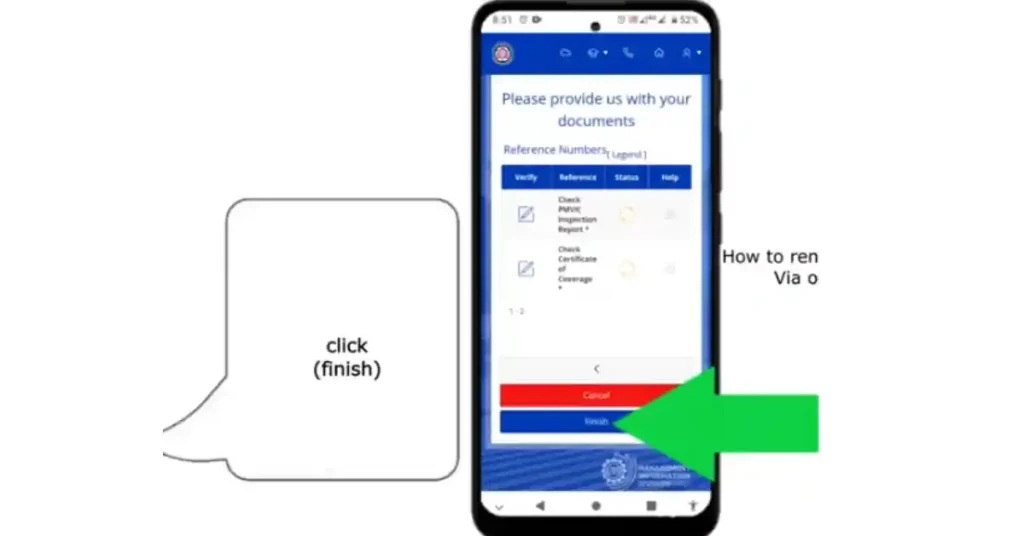
Then tap on “Finish” and complete uploading documents.
Step 5: Pay LTO Fees Online
After uploading, tap on the “Proceed to Payment”.
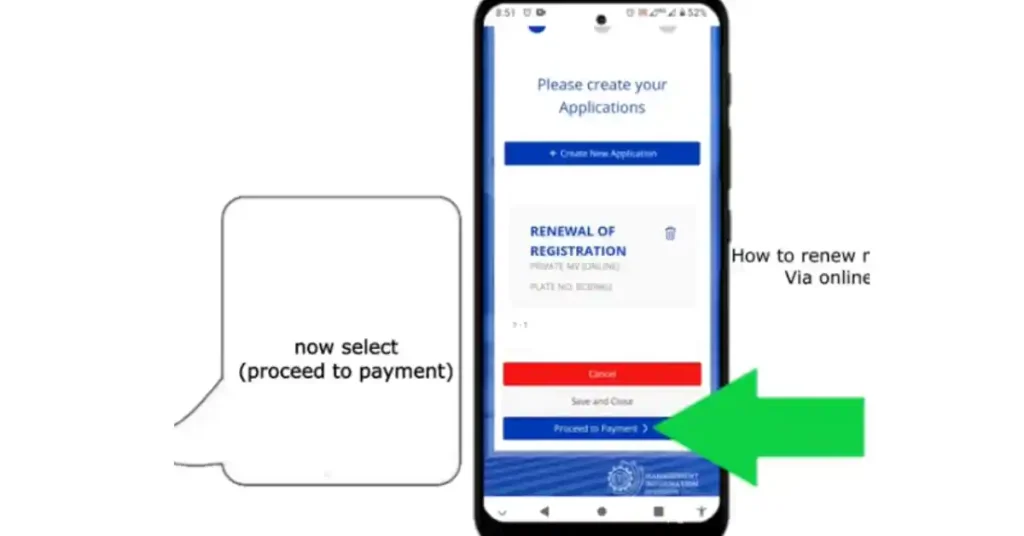
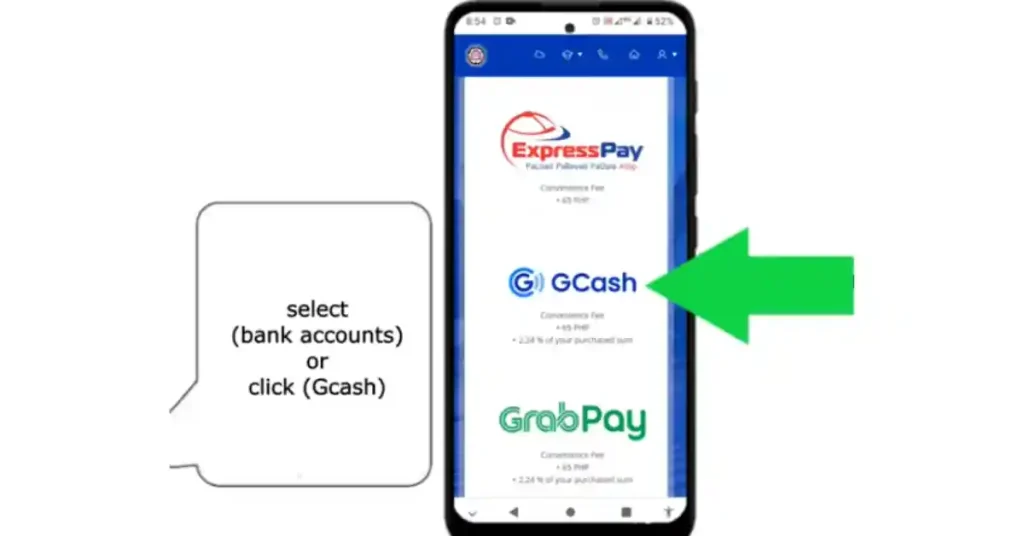
Then choose the payment option like GCash, GrabPay or any available through which you conveniently pay. If possible select GCash.
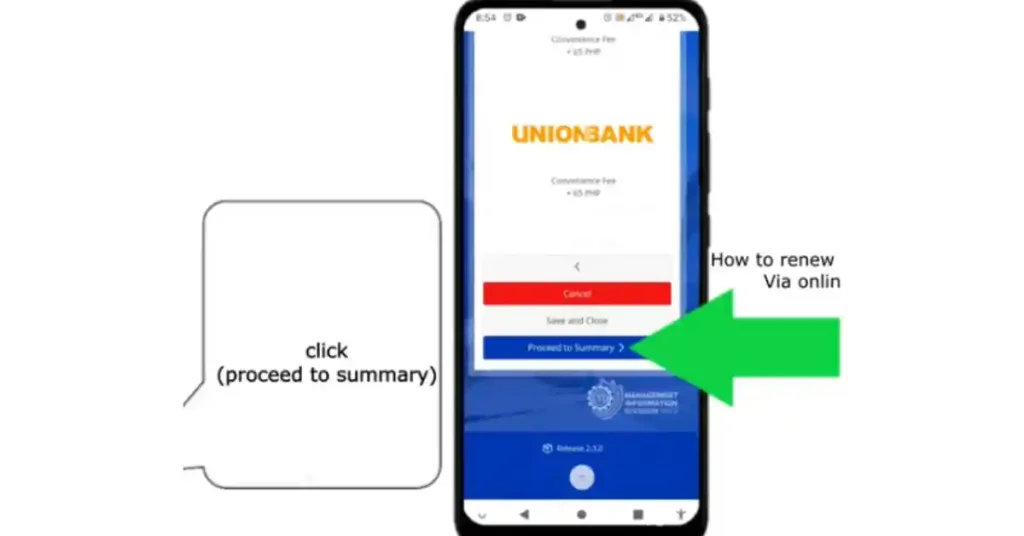
Now tap on “Proceed to Summary”.
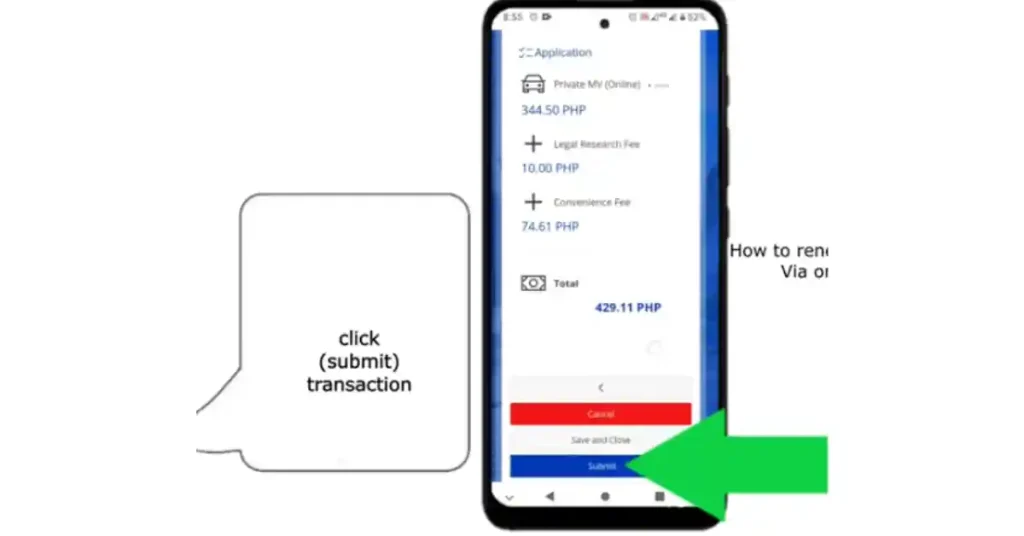
Then click on “Submit” button.
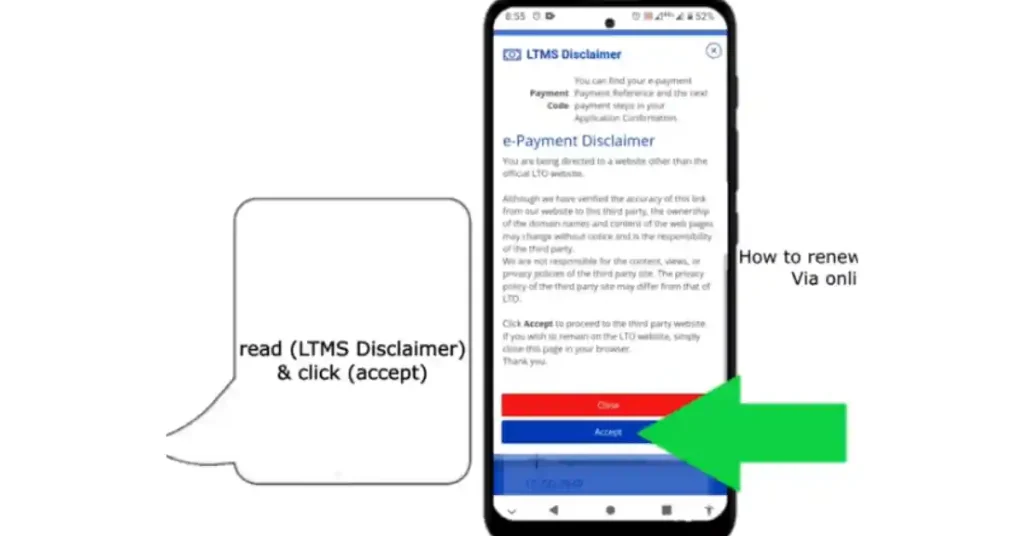
Now click “Accept” to agree with the LTMS Disclaimer.
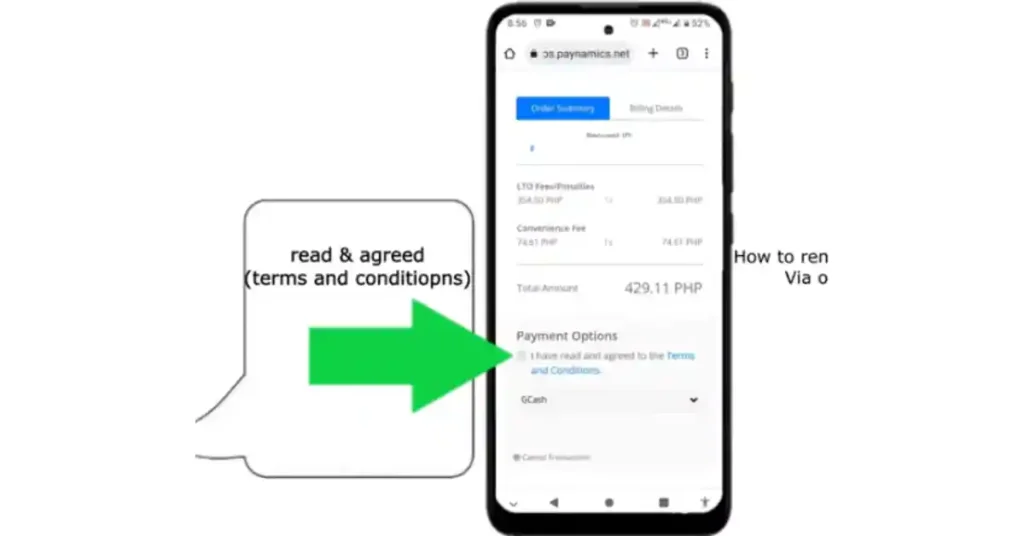
Also read and agree to the LTMS terms and conditions.
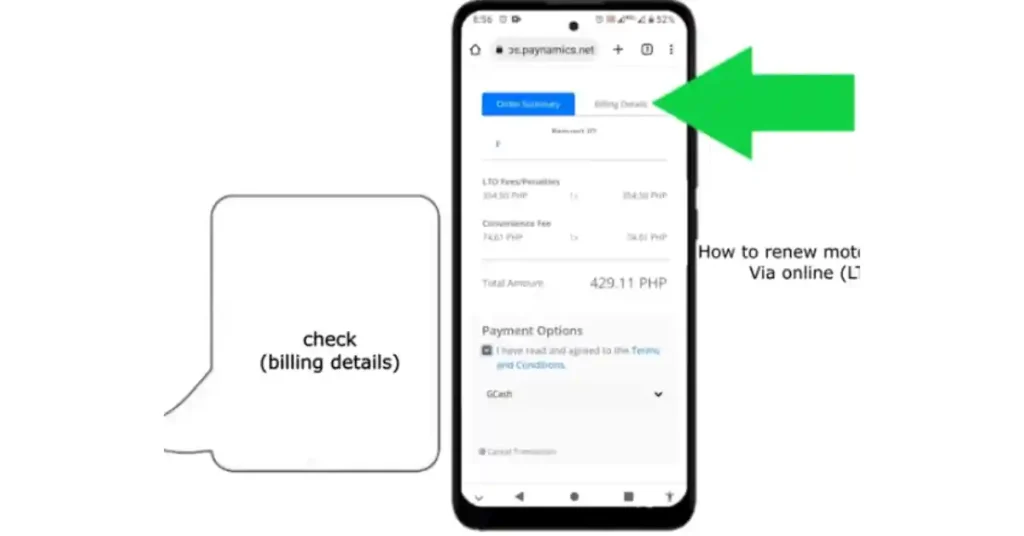
Now click the “Billing details” on the left side.
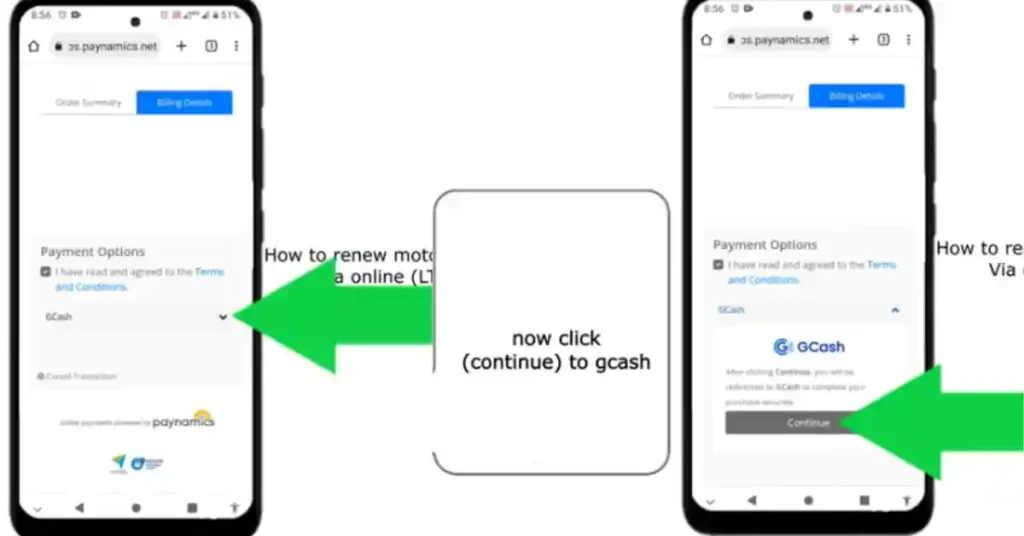
Now tap the GCash options and click “Continue”.
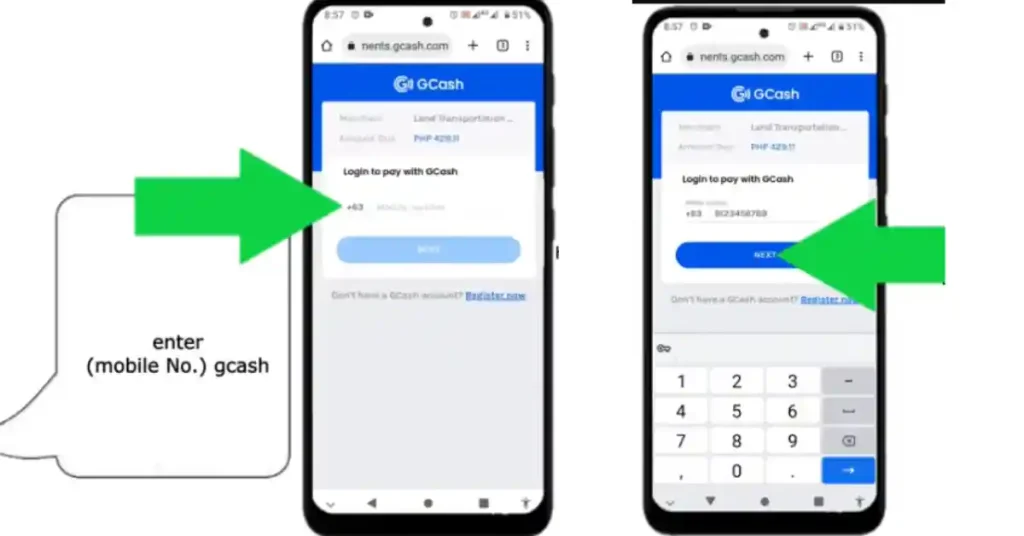
Now provide your valid mobile number which is linked to your GCash account and tap on “Next”.
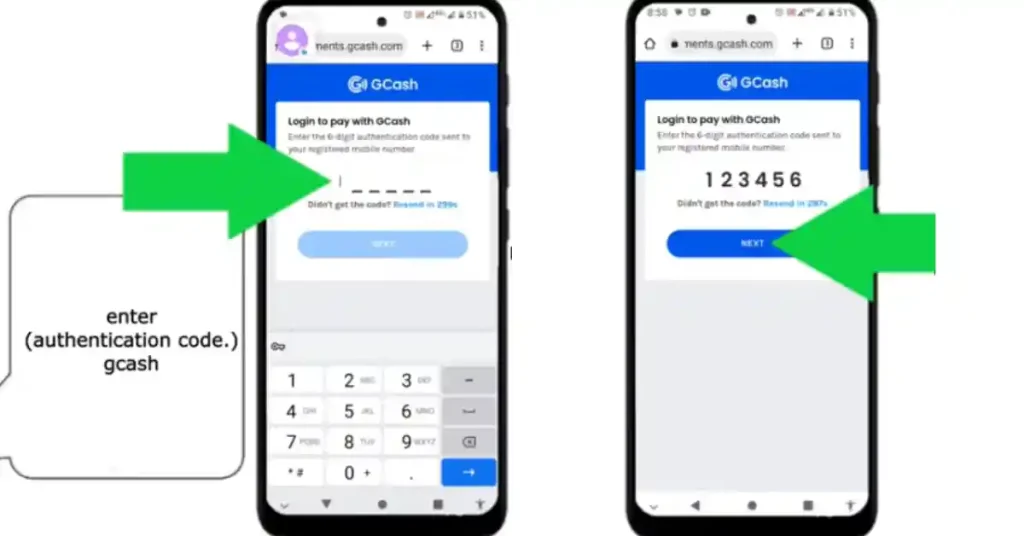
Now, enter 6-digits authentication code by GCash and tap on “Next”.
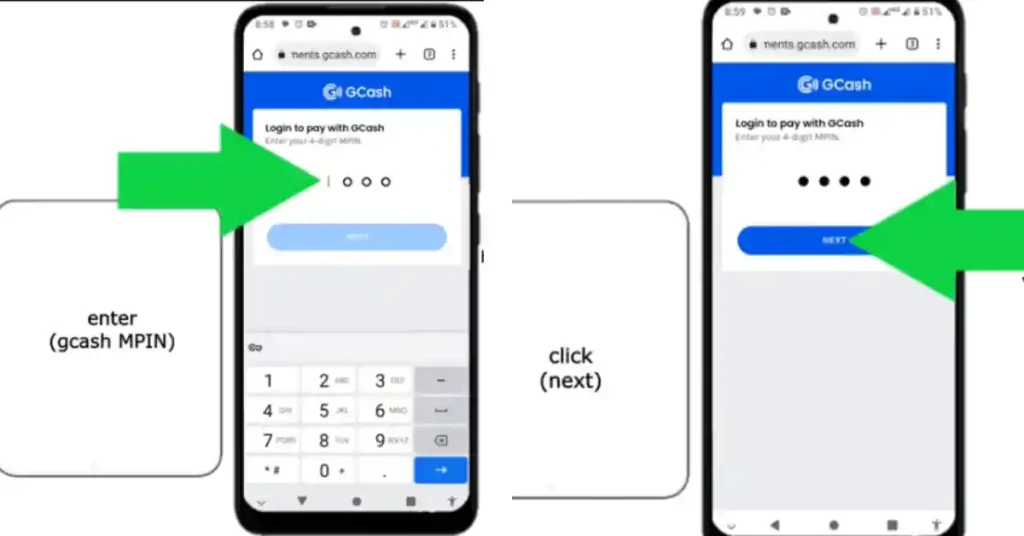
Provide GCash MPIN and tap on “Next”.
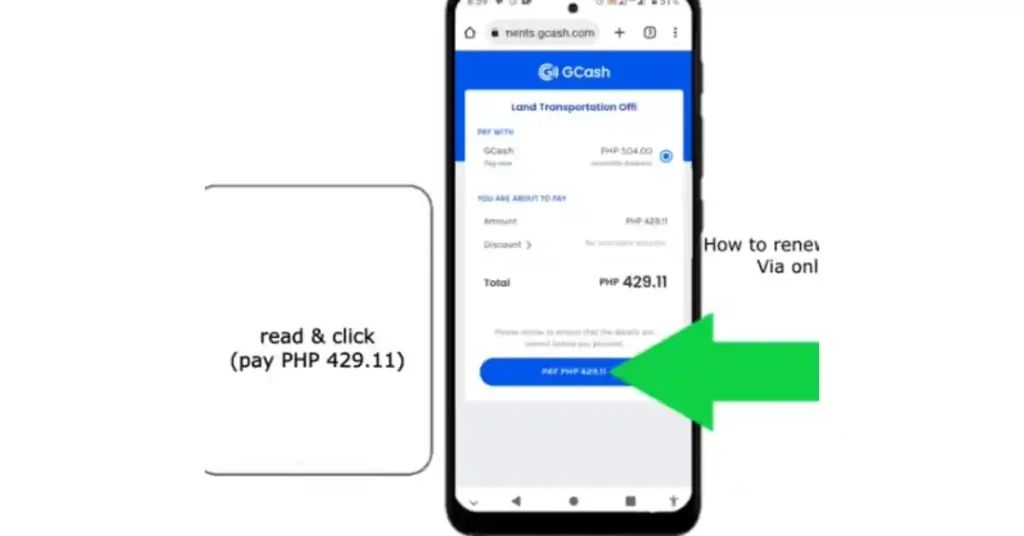
Now review your payment and tap on the “Pay PHP(you billing amount)”.
Now tap on the “Proceed” button.
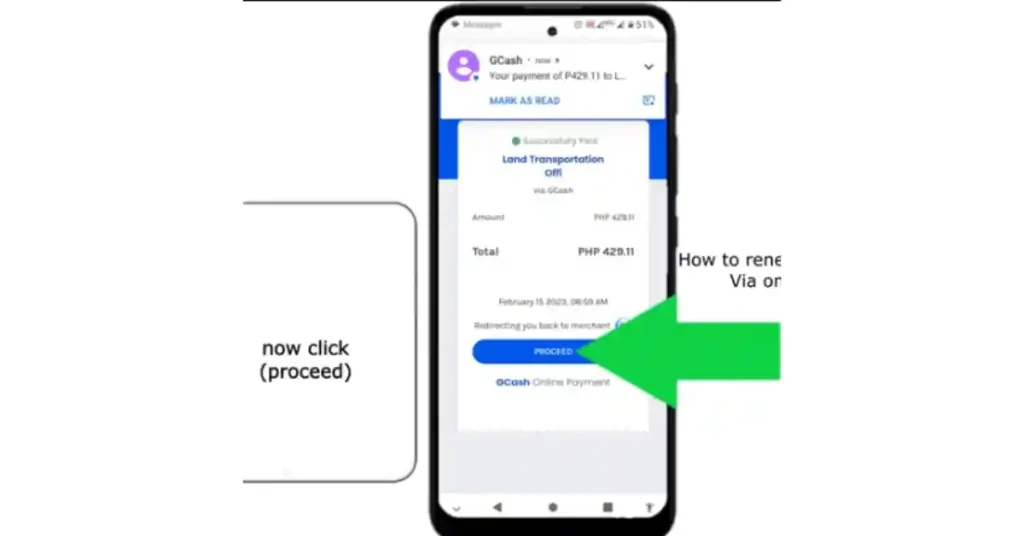
You have proceeded the transaction successfully, now click “Continue” and proceed for your OR receipt.
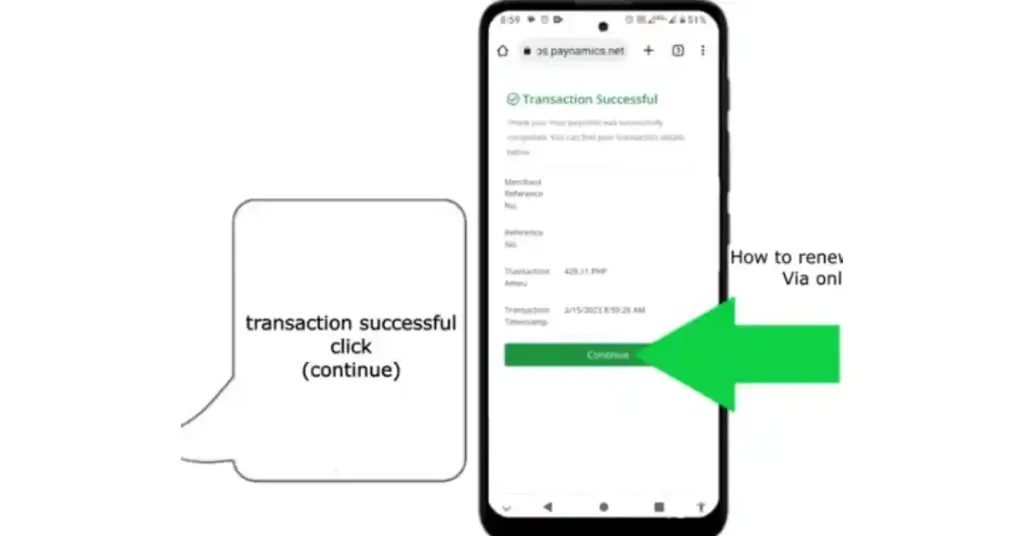
Step 6: Download Official Receipt (OR)
If you have done with your payment successfully, then tap on “Continue” button to get your OR. And then click “Official Receipt”.
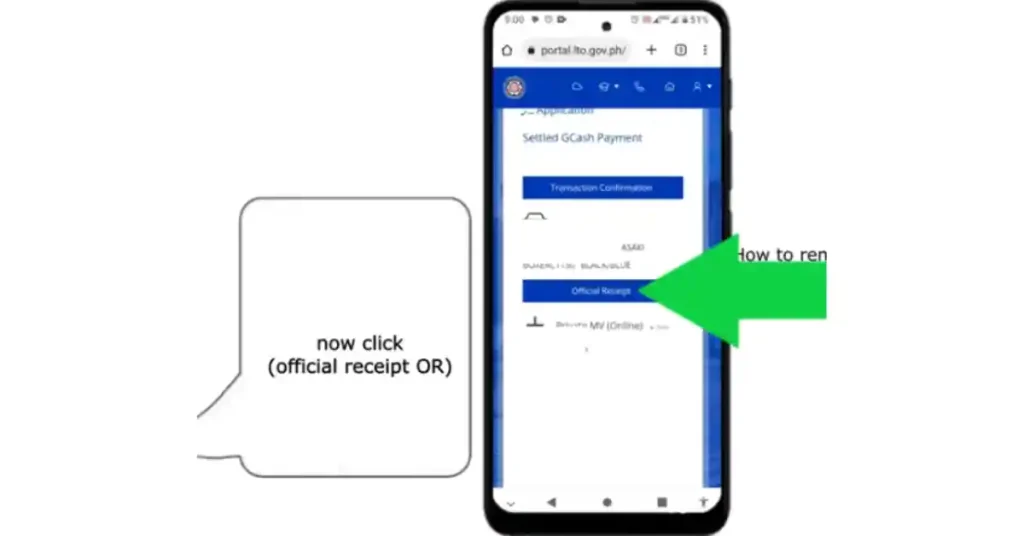
Now click “Open”.
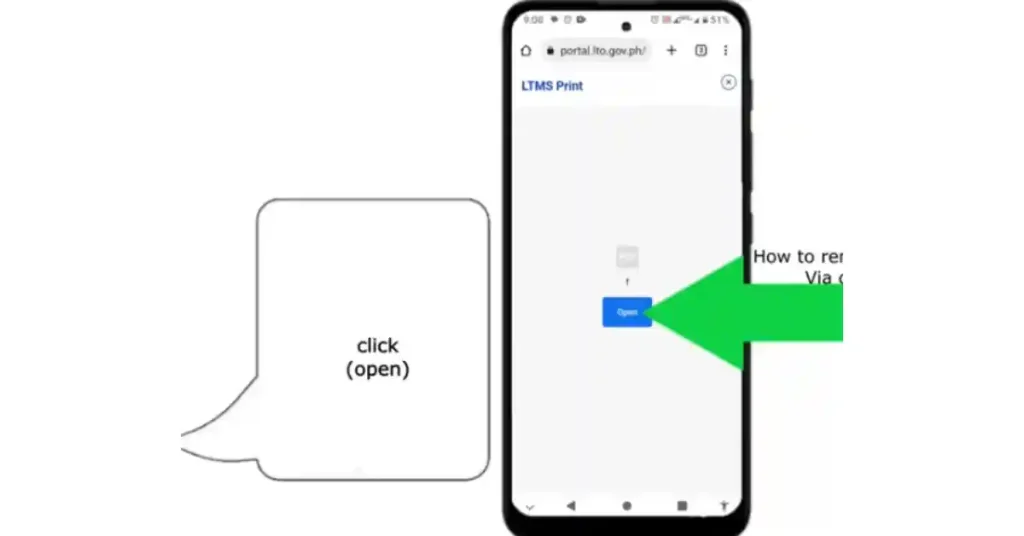
Click “Download”.
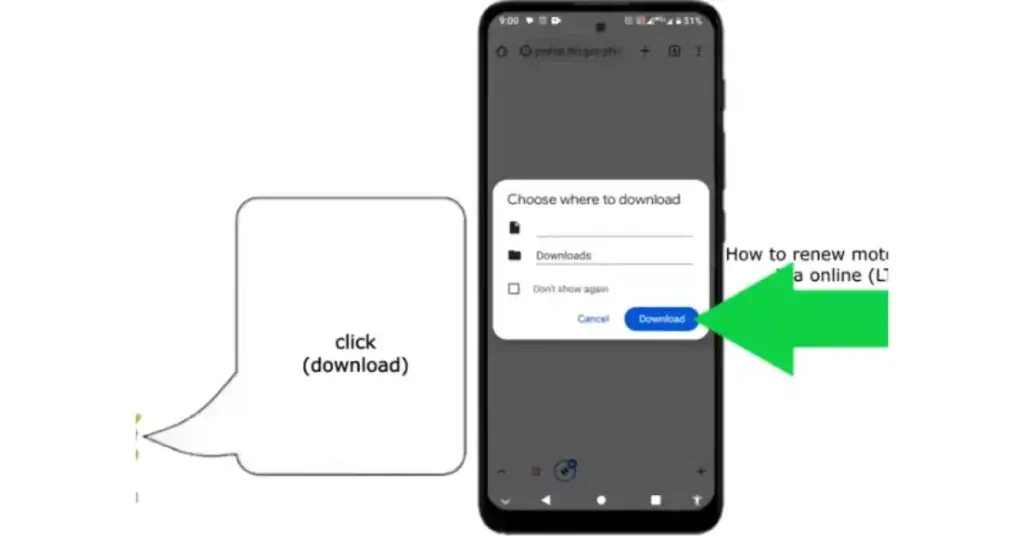
Now you have your OR receipt on your screen. Now click the 3-dots from the top right corner of your screen.
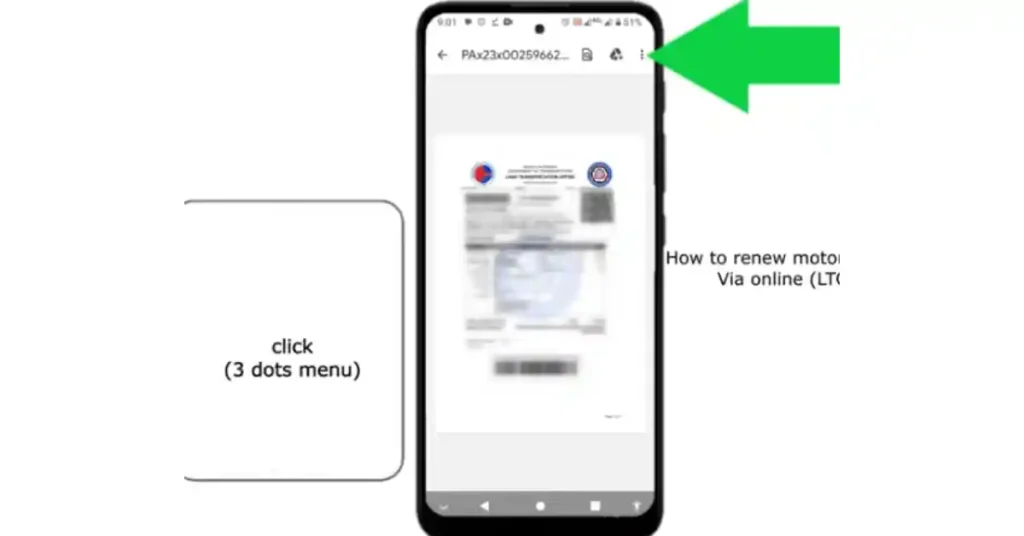
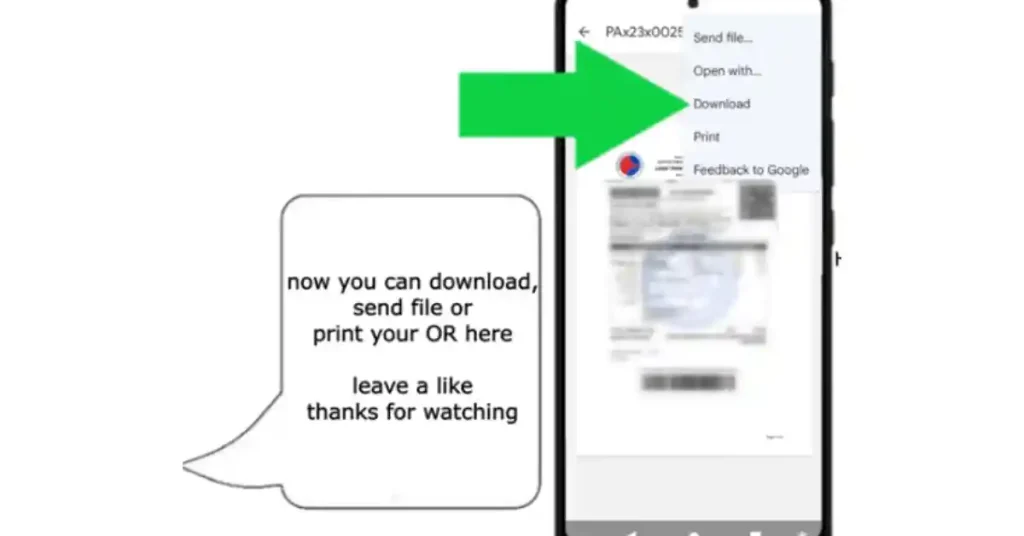
You have multiple options like download, share and print. So, choose “Download” if you want to download it and it will be downloaded directly into your device.
The Land Transportation Management System (LTMS) Portal at portal.lto.gov.ph is LTO’s official digital platform. You can use it to:
- Renew your driver’s license
- Book LTO appointments
- Complete the CDE exam online
- Check your traffic violations and pay fines
- Track your vehicle registration status
- Access your Electronic Driver’s License (eDL)
Since 2024, walk-in service has been discontinued at most Metro Manila LTO offices. This means booking an appointment through the LTMS portal is now mandatory for license renewals at these branches. With an appointment, your branch visit typically drops from 3–4 hours of walk-in queueing to about 90 minutes.
The LTO appointment booking system is completely free. A ₱65 convenience fee only applies if you choose to pay your renewal fees online during booking.
How to Check LTO Registration Renewal Status?
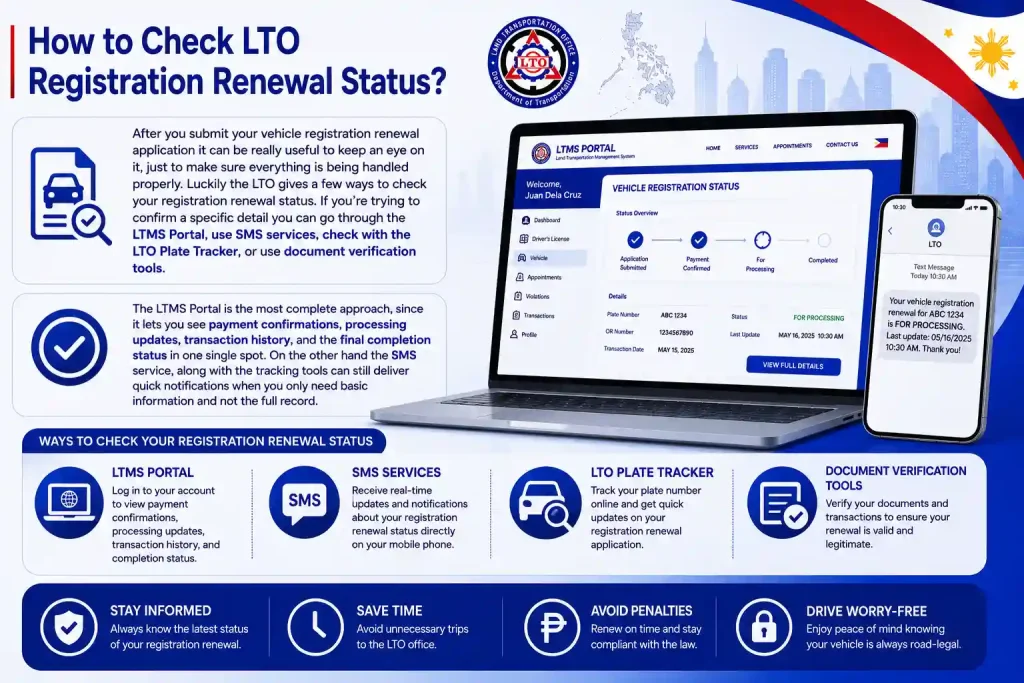
After you submit your vehicle registration renewal application it can be really useful to keep an eye on it, just to make sure everything is being handled properly. Luckily the LTO gives a few ways to check your registration renewal status. If you’re trying to confirm a specific detail you can go through the LTMS Portal, use SMS services, check with the LTO Plate Tracker, or use document verification tools.
The LTMS Portal is the most complete approach, since it lets you see payment confirmations, processing updates, transaction history, and the final completion status in one single spot. On the other hand the SMS service , along with the tracking tools can still deliver quick notifications when you only need basic information and not the full record.
LTO Penalties for Late Renewal
Missing your LTO renewal deadline is one of the most expensive mistakes you can make as a driver in the Philippines. The longer you delay, the more you pay and at a certain point, you risk losing your vehicle entirely. Here is exactly what happens when you let your renewal lapse.
Penalties for Late Driver’s License Renewal
Good news first: as of 2026, the LTO does not charge a monetary late penalty for an expired driver’s license. Whether your license expired last month or two years ago, you still pay only the standard renewal fee ₱585 for a 5-year non-professional license and ₱720 for a 5-year professional license.
However, there are still real consequences for letting your license expire:
- You cannot legally drive with an expired license. If caught, you face a traffic violation and fine on top of your renewal costs.
- Unpaid traffic violations must be settled first. You cannot renew at all until all fines are cleared through the LTMS portal or at an LTO branch.
- If your license has been expired for more than 2 years, you will need to retake the written and practical driving exams before you can renew.
The bottom line: even without a direct monetary late penalty on the license itself, the indirect costs of driving on an expired license, traffic fines, exam fees, and the hassle of settling violations make timely renewal well worth it.
Penalties for Late Car Registration Renewal
Vehicle registration penalties are a different story. The LTO uses a staggered penalty system based on how long your registration has lapsed, and the fees can climb very quickly.
Penalty structure for late car registration:
| Duration of Delay | Penalty |
|---|---|
| Within Renewal Month (Missed Your Assigned Week) | ₱200 surcharge (cars) / ₱100 (motorcycles) |
| 1 Month to 12 Months Late | 50% surcharge on your MVUC (Motor Vehicle User’s Charge) |
| Beyond 12 Months | 50% of MVUC + additional renewal fee for each missed year |
| Caught Driving with Expired Registration (Expired Over 1 Month) | ₱10,000 apprehension fine + vehicle impoundment |
If your registration has been expired for over 12 months, your vehicle may also be flagged for alarm status in LTO’s system. This prevents you from completing any renewal until you settle all outstanding penalties and undergo a full LTO vehicle inspection.
What Happens If You Get Caught Driving with Expired Registration
This is where things get serious. The LTO strictly enforces its “No Registration, No Travel” policy on public roads. If you are apprehended while driving a vehicle with registration that has been expired for more than one month:
- You face an automatic ₱10,000 fine
- Your vehicle will be immediately impounded
- You will not get your vehicle back until the registration is updated and all penalties are paid, including impoundment charges
Here is something many drivers don’t realize, even driving your unregistered vehicle directly to an LTO office for the purpose of renewal is technically a violation. If stopped on the way, you are still subject to the ₱10,000 fine and impoundment. The LTO recommends having an unregistered vehicle transported by tow truck to avoid this situation.
Hidden Consequences of Expired Registration
Beyond the direct fines, letting your car registration lapse creates a chain of other problems:
- Car insurance becomes void. Most comprehensive insurance policies are invalidated if your vehicle registration has lapsed. Any accident during this period leaves you personally liable for all damages.
- RFID and expressway access may be blocked. Some toll plazas may deny RFID loading or entry for vehicles with visibly expired windshield stickers.
- Vehicle resale is complicated. Outstanding violations and unpaid penalties must be resolved before ownership can be legally transferred to a new buyer.
When Are Penalties Waived?
The LTO does occasionally waive late renewal penalties in specific circumstances. In the past, the LTO has suspended fines for motorists in areas affected by typhoons, flooding, and other declared calamities. These waivers are announced through official LTO memoranda and apply only to the specific areas and time periods stated. Outside of these special circumstances, penalties apply in full.
Always check the official LTO website (lto.gov.ph) for any active penalty waivers before assuming your late fees have been suspended.
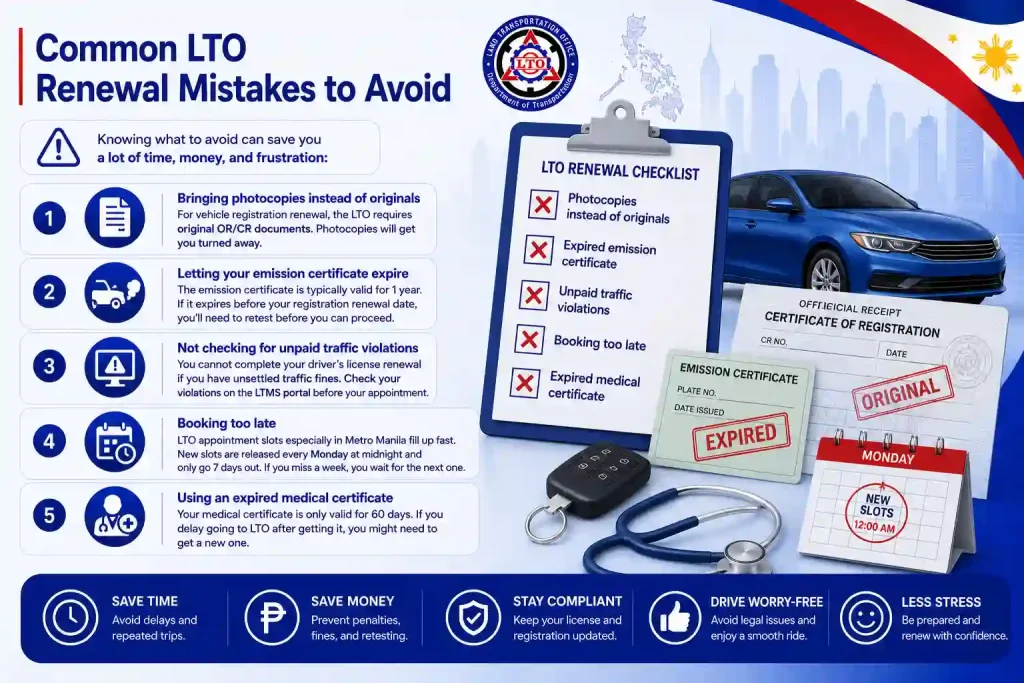
Common LTO Renewal Mistakes to Avoid
Knowing what to avoid can save you a lot of time, money, and frustration:
- Bringing photocopies instead of originals For vehicle registration renewal, the LTO requires original OR/CR documents. Photocopies will get you turned away.
- Letting your emission certificate expire The emission certificate is typically valid for 1 year. If it expires before your registration renewal date, you’ll need to retest before you can proceed.
- Not checking for unpaid traffic violations You cannot complete your driver’s license renewal if you have unsettled traffic fines. Check your violations on the LTMS portal before your appointment.
- Booking too late LTO appointment slots especially in Metro Manila fill up fast. New slots are released every Monday at midnight and only go 7 days out. If you miss a week, you wait for the next one.
- Using an expired medical certificate Your medical certificate is only valid for 60 days. If you delay going to LTO after getting it, you might need to get a new one.
FAQs


Final Thoughts
LTO renewal doesn’t have to be a full-day nightmare. With the LTMS portal now available for appointments, online payments, and the CDE exam, most of the heavy lifting can be done from home. The key is starting early, don’t wait until the week your license or registration expires.
Renew your driver’s license 60 days before it expires. Renew your car registration before the deadline printed on your OR/CR. Keep your documents organized and up to date. Do that, and your LTO renewal experience will be smooth and stress-free.