How to Check Plate Number in LTO: Complete 2026 Guide for Filipino Motorists
Checking your plate number in the Land Transportation Office (LTO) means verifying the registration status, availability, or release details of your vehicle’s license plates through official channels. This process helps you confirm whether your plates are ready for pickup or track ongoing registration status.
According to LTO data from early 2026, over 1.2 million vehicle owners across the Philippines still wait for their license plates. Many registered their vehicles years ago. The backlog exists because of manufacturing delays and distribution challenges. Knowing how to check your plate number status saves you unnecessary trips to LTO offices and helps you plan pickup schedules better.
This guide shows you three reliable methods to check your LTO plate number. You will learn online verification steps, SMS inquiry processes, and in-person checking procedures. We also cover common issues motorists face and how to solve them quickly.
What Are the Official Methods to Check Your LTO Plate Number?
You can check your LTO plate number through three official methods: online verification via ltotracker.ph, SMS inquiry by texting your plate details to 2600, or visiting your LTO district office directly. Each method works for different situations and accessibility needs.
The LTO implemented these multiple checking methods to reduce office congestion. They also wanted to give motorists more convenient options. The online system launched in 2023 processes thousands of queries daily. The SMS service works even without internet connection. In-person visits remain available for complex cases or when you need immediate assistance.
Understanding the LTO Plate Number System
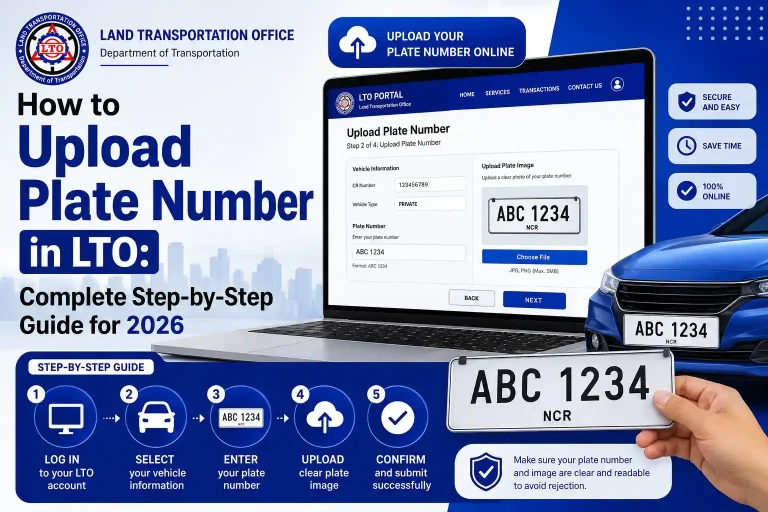
LTO plate numbers follow specific formats based on vehicle type. Private cars use three letters followed by four numbers (ABC 1234). Motorcycles have two letters and five numbers (AB 12345). Government vehicles carry red plates with different coding.
The system changed in 2014 when the LTO introduced new plate designs. Older vehicles still carry plates from previous formats. Knowing your plate format helps when checking status or reporting issues. The alphanumeric combination is unique to your vehicle nationwide.
Required Information Before Checking
Before you start checking, gather these details:
- Conduction sticker number or temporary plate details
- Vehicle registration date and location
- Official receipt (OR) and certificate of registration (CR) numbers
- Mobile number used during registration
- Chassis and engine numbers from your documents
Having complete information speeds up the checking process. Some methods require only basic details. Others need more specific data for verification. Keep your vehicle documents accessible when performing any status check.
How Do You Check Your Plate Number Online?
Online checking through ltotracker.ph requires entering your conduction sticker or plate number in the search field, then viewing the results that show your plate status, release date, and pickup location. This method works 24/7 from any device with internet access.
The LTO Portal system connects to LTO databases in real time. It shows accurate information about plate production and distribution status. The website processes queries instantly without requiring registration or login credentials.
Step-by-Step Online Verification Process
Follow these steps for online checking:
- Open your web browser and go to ltotracker.ph
- Locate the plate number search box on the homepage
- Enter your conduction sticker number or assigned plate number
- Click the search or check button to submit your query
- Wait 3-5 seconds for results to load
- Review the status information displayed on screen
- Take a screenshot or note down your pickup details
The results page shows multiple data points. You will see manufacturing status, release status, and assigned LTO office. Some results include estimated pickup dates. If your plate shows “for release,” you can proceed to pickup. A “processing” status means production continues.
Understanding Online Check Results
Online results display several status categories:
| Status | Meaning | Action Required |
|---|---|---|
| For Release | Plate ready for pickup | Visit designated LTO office with documents |
| Processing | Plate under production | Wait and check again in 30 days |
| Released | Plate already claimed | Verify if you collected it |
| No Record | Information not in system | Contact LTO office directly |
Each status requires different follow-up actions. “For release” means you should prepare required documents for pickup. “Processing” indicates patience is needed. “Released” status needs verification because it might indicate someone else claimed your plates. “No record” results require manual inquiry at your registration office.
Troubleshooting Online Check Issues
Sometimes online checks fail or show errors. Common problems include incorrect plate format entry or system maintenance periods. Double-check your plate number spelling and spacing. The system is case-sensitive and requires exact formatting.
If the website loads slowly, try different browsers or devices. Clear your browser cache before retrying. Peak hours (10 AM to 2 PM) sometimes slow down response times. Early morning or evening checks often work faster.
How Can You Check Your LTO Plate Number via SMS?
SMS checking involves sending a text message with format “LTO VEHICLE [plate number]” to 2600, then receiving an automated reply within minutes containing your plate status and relevant details. This method costs standard SMS rates from your mobile network.
The LTO SMS system operates through partnership with telecommunications companies. It handles thousands of daily queries. The service works without internet connection, making it accessible in rural areas or during connectivity issues.
Correct SMS Format and Sending Process
Use this exact format when texting:
- Open your phone’s messaging app
- Create a new message to number 2600
- Type: LTO VEHICLE ABC1234 (replace with your actual plate)
- Include spaces between LTO, VEHICLE, and the plate number
- Send the message and wait for automated response
- Response arrives within 1-5 minutes typically
The system rejects incorrectly formatted messages. Always use capital letters for consistency. Do not add extra characters or punctuation marks. One space between each element ensures proper processing.
Interpreting SMS Response Messages
SMS replies contain condensed information due to character limits. A typical response includes plate status, release office code, and contact details. Save these messages for reference when visiting LTO offices.
Some responses include additional instructions. Follow-up codes might require another text query. The system provides helpline numbers for unclear responses. Network delays sometimes affect delivery time, especially during storms or technical issues.
What Is the Process for Checking Plate Numbers at LTO Offices?
In-person checking requires visiting your LTO district office during business hours, presenting your OR/CR and valid ID at the inquiry counter, and speaking with staff who access the system to verify your plate status directly. This method provides immediate clarification and assistance.
LTO offices maintain dedicated inquiry counters for plate-related questions. Staff members can check detailed records not visible through online systems. They also help resolve discrepancies or errors in your registration data.
Documents Needed for Office Inquiry
Bring these documents when visiting LTO offices:
- Original official receipt (OR) from vehicle registration
- Original certificate of registration (CR) or copy
- Valid government-issued ID with photo
- Conduction sticker or temporary plate if applicable
- Authorization letter if checking for someone else
- Special power of attorney for representative claims
Complete documents prevent rejection or repeat visits. Photocopies work for some offices, but originals are safer. Keep documents organized in a folder for easy presentation. Missing paperwork means staff cannot process your inquiry.
Office Inquiry Procedure and Timeline
The in-person checking process follows these steps:
- Enter the LTO office and locate the inquiry section
- Get a queue number from the ticket dispenser
- Wait for your number to be called
- Approach the designated window when called
- Present your documents to the attending officer
- State your purpose clearly (plate number inquiry)
- Wait while staff checks the system (2-5 minutes)
- Receive verbal confirmation of status and next steps
- Request written confirmation if needed
Waiting times vary by office location and time of day. Extension offices typically have shorter queues than main branches. Arriving before 9 AM or after 2 PM reduces wait time. Fridays and month-end periods are busiest.
Best LTO Offices for Plate Inquiries
Not all LTO offices handle plate distribution equally. Your assigned office depends on your registration location. Checking at the wrong office wastes time because staff cannot access all records.
Major distribution centers in Metro Manila include LTO East Avenue, LTO Novaliches, and LTO Pasay. Provincial motorists should check their registered district office. Some satellite offices only handle renewals, not plate releases. Call ahead to confirm the office handles plate inquiries.
Why Should You Regularly Check Your LTO Plate Number Status?
Regular status checking prevents plate expiration penalties, ensures you collect plates before distribution windows close, and helps you avoid using temporary conduction stickers beyond legal limits. The LTO requires permanent plate installation within specific timeframes.
Thousands of motorists face penalties because they missed pickup notifications. The LTO sends text alerts, but many change phone numbers after registration. Plates sit unclaimed for years while owners pay renewal fees. Active monitoring protects you from these problems.
Legal Implications of Delayed Plate Collection
Using conduction stickers beyond allowed periods violates LTO regulations. Traffic enforcers can issue citations for improper plate display. Some violations carry fines up to ₱3,000. Expired conduction stickers also complicate accident claims and insurance processing.
The law requires permanent plates within specific timeframes from registration. Extensions exist for manufacturing delays, but you must show proof of regular status checking. Courts consider failure to claim available plates as negligence in traffic violation cases.
Benefits of Timely Plate Installation
Installing permanent plates offers multiple advantages:
- Compliance with traffic laws reduces citation risk
- Easier vehicle identification in parking lots and garages
- Improved resale value with complete registration documents
- Professional appearance compared to temporary stickers
- Better security through official LTO tracking systems
Permanent plates also simplify renewal processes. LTO renewal systems prioritize properly-plated vehicles. Some cities require permanent plates for parking permits or subdivision entry. The investment in checking and collecting saves long-term hassle.
What Common Problems Occur During Plate Number Checking?
Common issues include system timeouts showing “no record found,” mismatched information between databases, incorrect formatting causing search failures, and outdated contact information preventing SMS delivery. Most problems have simple solutions once you identify the specific error.
Technical glitches affect even the best systems. The LTO database updates periodically, creating temporary information gaps. Network maintenance windows also block access. Understanding these patterns helps you time your checks better.
Resolving “No Record Found” Errors
This error typically means your information has not transferred to the plate checking database yet. New registrations take 30-45 days to appear in tracking systems. Rush registrations or special cases might take longer.
Try these solutions when facing this error:
- Wait 7 days and check again using the same method
- Verify you entered the correct plate or conduction number
- Try alternative checking methods (online versus SMS)
- Contact your registration office to confirm data entry
- Visit the office in person with original documents
Persistent errors need manual resolution. Bring your OR/CR to the office and request manual database entry verification. Staff can check backend systems not accessible through public portals. They might discover data entry errors fixable on the spot.
Handling Mismatched Information
Sometimes your plate number check shows details that do not match your records. Wrong vehicle type, incorrect color, or different engine numbers indicate database errors. These need immediate correction to prevent future complications.
Report mismatches to your registration office immediately. Bring supporting documents proving the correct information. The office files correction requests that update central databases. Processing takes 15-30 days. Check again after this period to confirm updates.
Dealing with System Maintenance Periods
The LTO schedules regular maintenance that temporarily disables checking systems. These windows typically occur late night (2 AM to 5 AM) or during major system upgrades. Planned maintenance gets announced on official LTO social media pages.
If you encounter maintenance messages, bookmark the how to upload plate number in lto guide for future reference. It contains updated schedules and alternative checking times. Never assume permanent system failure during maintenance periods.
How Do You Collect Your Plates After Checking Shows “For Release”?
Collection requires visiting the designated LTO office during release schedules, presenting your OR/CR and valid ID, signing the logbook, and receiving your plates in a sealed package for immediate installation. Some offices require advance appointments for plate claiming.
The claiming process differs slightly between offices. Metro Manila facilities handle high volumes through numbered queues. Provincial offices might use simpler first-come systems. Knowing your office’s specific procedure saves time.
Required Documents for Plate Collection
Prepare these items before claiming plates:
- Original official receipt (OR) from latest registration
- Original certificate of registration (CR)
- Two valid government IDs with photo and signature
- Conduction sticker or temporary plate for surrender
- Authorization letter if sending a representative
- Original OR/CR if representative is claiming
Representatives need special requirements. They must present the owner’s authorization letter, their own valid ID, and the vehicle owner’s original documents. Notarization of authorization letters is recommended but not always required. Check your office’s specific policies.
Plate Installation Requirements
The LTO requires professional installation or proper self-installation following standards. Plates must be securely fastened to designated vehicle areas. Front and rear placement is mandatory for four-wheeled vehicles. Motorcycles need only rear plates.
Installation bolts should be rust-resistant. Plates must be horizontal and clearly visible. Obscured plates violate display regulations and invite citations. Some offices offer on-site installation services for small fees. This ensures compliance with all technical requirements.
What Are Expert Tips for Smooth Plate Number Checking?
Check your status monthly after registration, save confirmation screenshots for reference, verify information accuracy before submitting queries, and maintain updated contact details with LTO to receive notifications. Proactive monitoring prevents last-minute problems.
Experienced motorists develop checking routines. Setting monthly phone reminders ensures regular verification. Creating a dedicated folder for vehicle documents speeds up information retrieval. These small habits prevent major headaches later.
Creating a Checking Schedule
Implement a systematic checking approach:
| Time Period | Checking Frequency | Recommended Method |
|---|---|---|
| First 3 months after registration | Bi-weekly | Online via ltotracker.ph |
| Months 4-6 | Monthly | SMS or online |
| After 6 months | Every 2 weeks | Office visit if still processing |
| When “for release” appears | Daily until collection | All methods for confirmation |
Creating a Checking Schedule
Implement a systematic checking approach:
This schedule balances diligence with practicality. Early frequent checks catch data entry errors quickly. Later intensive checking ensures you do not miss release windows. Adjust frequency based on your specific situation and LTO office responsiveness.
Keeping Documentation Organized
Maintain both physical and digital copies of all vehicle documents. Scan your OR, CR, and related papers. Store digital copies in cloud storage or email them to yourself. Physical documents should stay in a waterproof folder inside your vehicle.
Label everything clearly with dates and transaction numbers. When checking produces results, screenshot or photograph the information. Create a timeline of your checking activities. This documentation helps resolve disputes and proves due diligence if issues arise.
Pro Tip: Set up a free Google Drive folder specifically for vehicle documents. Upload clear photos of your OR, CR, and all LTO correspondence. This creates accessible backup copies you can access from any device when checking plate status or handling emergencies.
Leveraging Multiple Checking Methods
Do not rely on just one verification method. Cross-check results using different systems. Online checks might show different timing than SMS responses. This happens because databases update at different intervals.
If online shows “processing” but SMS says “for release,” visit the office to confirm. The most recent information wins. Staff access live data that online systems might cache. Using all three methods creates a complete picture of your plate status.
How Does the LTO Plate Production and Distribution System Work?
The LTO contracts private manufacturers to produce plates in batches, then distributes them to regional offices based on registration volumes, where they are sorted by conduction number and prepared for motorist collection. The entire process takes 3-12 months depending on production capacity.
Understanding this system explains why checking reveals different statuses. Your plate moves through multiple stages from production to your hands. Each stage has its own timeline and potential delays.
Manufacturing and Quality Control Phases
Plate production follows strict specifications. Manufacturers use reflective materials meeting international standards. Each plate undergoes quality inspection before LTO acceptance. Rejected batches get reproduced, causing delays.
The LTO requires specific security features on modern plates. Holograms, special fonts, and embedded chips (on some new plates) prevent counterfeiting. These features complicate production compared to simple stamped metal plates. Quality control sometimes discovers defects months into production runs.
Distribution and Assignment Process
Completed plates ship to LTO central warehouses first. Staff sort them by district office assignment. This sorting process alone takes weeks for large batches. Regional distribution then occurs through contracted logistics providers.
Your assigned office receives plates based on registration dates. They inventory received plates against requests. The “for release” status appears only after this final inventory confirmation. Some offices wait until accumulating sufficient volumes before processing releases, causing additional delays.
What Should You Do If Your Plate Remains Unreleased After Extended Periods?
File a formal inquiry at your LTO district office if your plate shows “processing” beyond 12 months, request escalation to the regional director for manufacturing delays, and consider filing complaints through the LTO hotline 1-3535 or their official social media channels. Persistent issues need aggressive follow-up.
Some motorists wait years for plates due to systemic problems. Passive waiting gets you nowhere. The squeaky wheel gets the grease in Philippine bureaucracy. Polite but firm advocacy moves your case forward.
Escalation Procedures and Channels
Start with your registration office. Request written confirmation of your inquiry and case number. If no resolution occurs within 30 days, escalate to the LTO regional office overseeing your district.
The LTO maintains a central hotline for complaints. Call 1-3535 during business hours and explain your situation. Reference your case number from the district office. Hotline staff can flag delays for priority review. Document all calls with dates, times, and agent names.
Alternative Solutions and Temporary Extensions
If extended delays persist, request temporary plate extensions from your office. These extend your conduction sticker validity. Not all offices grant extensions willingly, but documented persistent checking strengthens your case.
Some motorists explore legal remedies for extreme delays. Small claims cases have succeeded when delays exceed contractual service standards. Consult a lawyer if delays surpass 24 months with no resolution. Government ombudsman complaints also pressure LTO offices into action.
How Do Recent LTO System Updates Affect Plate Checking?
The 2025-2026 LTO digital transformation introduced real-time tracking, mobile app integration, and automated SMS notifications for plate releases, making checking easier but requiring motorists to update registered contact information for alert receipt. New systems roll out gradually across regions.
These improvements aim to reduce the checking burden. Automated alerts notify you when status changes. But you must maintain current contact details for these benefits. Many motorists still use old phone numbers registered years ago.
Updating Your LTO Contact Information
Visit your registration office to update phone numbers and email addresses. Bring valid ID and your current CR. Staff update their database within minutes. This simple action ensures you receive automated notifications.
Some offices now accept online contact updates through their portals. Check your district LTO website for this functionality. Email updates take 5-7 business days to process. Phone number changes reflect faster.
Benefits of the New Digital Systems
Modern LTO systems offer improved accuracy and speed. Real-time updates mean less discrepancy between checking methods. Mobile apps (where available) provide push notifications for status changes. These conveniences reduce the need for repeated manual checking.
The systems also integrate renewal reminders with plate status. You can check both registration validity and plate availability in one query. This consolidation saves time and creates a more complete vehicle information picture.