LTO Exam Reviewer 2026: Complete Guide & Practice Test
The LTO exam reviewer is a study tool that helps Filipino drivers prepare for the written test required to get a student permit or driver’s license. It covers traffic rules, road signs, and safe driving practices based on Republic Act 4136 and LTO regulations.
In 2024, the Land Transportation Office reported that only 68% of first-time test takers passed the written exam on their first attempt. That means nearly one in three people failed because they didn’t prepare enough or didn’t know what to expect.
This guide walks you through everything you need to know about the LTO exam. You’ll learn what topics are covered, how the test works, where to find free reviewers, and how to pass on your first try. We’ll also include a practice test you can take right now to check your readiness.
What Is the LTO Exam and Why Do You Need to Take It?
The LTO exam is a computer-based written test that checks your knowledge of Philippine traffic laws, road signs, and safe driving practices. You must pass this exam before you can get a student permit or driver’s license from the Land Transportation Office.
The test is mandatory for all applicants. No one can skip it. Whether you’re applying for a non-professional license to drive your own car or a professional license to work as a driver, you need to pass this exam first.
Here’s why the exam exists. The LTO wants to make sure every licensed driver understands basic traffic rules and knows how to respond to common road situations. Drivers who know the law are less likely to cause accidents or violate traffic regulations.
The exam is part of the student permit application process. Once you pass, you can move on to the next steps like attending a theoretical driving course (TDC) and taking the practical driving exam. Without passing the written test, you can’t proceed.
Who Needs to Take the LTO Exam?
You need to take the LTO exam if you’re applying for any of these:
- Student permit (first-time applicants)
- Non-professional driver’s license
- Professional driver’s license
- Conductor’s license
- License renewal after 10 years (some cases require re-testing)
Foreign nationals converting their home country license to a Philippine license also need to take this exam unless their country has a reciprocity agreement with the Philippines. Most expats and tourists staying long-term will need to pass the test.
What Happens If You Don’t Pass?
If you fail the exam, you can retake it. The LTO allows you to try again after paying the exam fee. There’s no limit on retakes, but you’ll need to pay ₱100 each time you take the test.
Failing delays your application. You can’t get your student permit or proceed with the practical driving test until you pass. That’s why preparing with an LTO Portal reviewer before your test date is important.
How Does the LTO Written Exam Work?
The LTO written exam is a 40-question multiple-choice test administered on a computer at any LTO office. You need to answer at least 30 questions correctly to pass, which equals a 75% passing score. The test is available in English and Filipino.
When you arrive at the LTO office, you’ll be directed to a computer station. The system will display one question at a time on the screen. You select your answer by clicking on one of the options. Once you submit an answer, you can’t go back and change it.
The test is not timed in most offices, but the LTO expects you to finish within 30 minutes. Most people complete it in 15 to 20 minutes. The system automatically calculates your score as soon as you finish.
What Does the Exam Cover?
The exam pulls questions from these main topics:
- Traffic signs and pavement markings
- Right-of-way rules
- Speed limits and traffic violations
- Defensive driving techniques
- Vehicle equipment requirements
- Penalties for traffic violations
- Road safety and emergency procedures
The majority of questions focus on traffic signs and right-of-way rules. These are the areas where most people make mistakes, so you should spend extra time reviewing them.
Can You Take the LTO Exam Online?
No. The LTO does not offer a fully online exam that you can take from home. You must visit an LTO office in person to take the official test. However, you can complete some preparation steps online through the LTMS Portal, including booking your appointment and watching the theoretical driving course videos.
Some private websites offer practice tests that simulate the real exam. These are helpful for studying, but they don’t replace the official test. You still need to go to the LTO office on your scheduled date.
What Topics Should You Study for the LTO Exam?
To pass the LTO exam, you need to study Philippine traffic laws, road signs, and safe driving practices. Focus on understanding the meaning of regulatory signs, knowing who has the right of way in common situations, and memorizing speed limits for different road types.
The exam questions come directly from Republic Act 4136 (the Land Transportation and Traffic Code) and LTO administrative orders. You don’t need to memorize the full text of the law, but you should understand the key rules that affect daily driving.
Traffic Signs and Road Markings
Traffic signs make up about 40% of the exam. You need to recognize and understand three types of signs: regulatory, warning, and guide signs.
Regulatory signs tell you what you must or must not do. These include stop signs, yield signs, speed limit signs, and no parking signs. If you disobey a regulatory sign, you can be fined or penalized.
Warning signs alert you to hazards ahead. Examples include curve ahead, slippery road, pedestrian crossing, and school zone signs. These signs are usually yellow with black symbols.
Guide signs provide directions and information. They show distances to cities, highway route numbers, and locations of services like gas stations or hospitals. These are usually green or blue.
| Sign Type | Color | Purpose | Example |
|---|---|---|---|
| Regulatory | Red or White | Commands or prohibitions | Stop, No Entry, Speed Limit |
| Warning | Yellow | Alert to hazards | Curve Ahead, Slippery Road |
| Guide | Green or Blue | Directions and information | Highway Number, City Distance |
Pavement markings include solid and broken lines, crosswalks, and arrows. A solid yellow line means no overtaking. A broken white line means you can change lanes if it’s safe. You’ll get questions asking what specific markings mean.
Right-of-Way Rules
Right-of-way rules determine who goes first at intersections, pedestrian crossings, and merging points. These questions trip up many test-takers because the rules change depending on the situation.
Here are the most common scenarios you’ll see on the exam:
- At an intersection with no signs or signals, the vehicle on the right has the right of way
- Pedestrians always have the right of way at marked crosswalks
- Emergency vehicles with sirens and lights have the right of way over all other traffic
- When turning left, you must yield to oncoming traffic going straight
- At a four-way stop, the first vehicle to arrive goes first
If two vehicles arrive at the same time, the vehicle on the right goes first. If you’re turning and another vehicle is going straight, the straight vehicle goes first.
Speed Limits and Traffic Violations
The exam tests your knowledge of speed limits in different zones. You need to know the maximum speed allowed on national highways, city streets, residential areas, and school zones.
Here are the standard speed limits in the Philippines:
- Open country roads: 80 km/h
- City streets: 40 km/h
- Residential areas: 20 km/h
- School zones: 20 km/h
- Through highways or boulevards: 100 km/h
Traffic violations include speeding, illegal parking, failing to stop at a red light, and driving without a license. The exam may ask what penalty applies to a specific violation. You don’t need to memorize exact fine amounts, but you should know which violations are serious enough to result in license suspension.
Defensive Driving Principles
Defensive driving means driving in a way that prevents accidents even when other drivers make mistakes. The LTO exam includes questions about how to react to hazards, maintain safe following distances, and avoid common crash situations.
Key defensive driving concepts you’ll see on the exam:
- Keep a 3-second following distance from the car in front of you
- Slow down in bad weather or poor visibility
- Check mirrors and blind spots before changing lanes
- Never assume other drivers will follow the rules
- Yield to avoid a collision even if you have the right of way
Pro Tip: The exam often asks what you should do in a dangerous situation. The safe answer is usually “slow down and yield” rather than “speed up” or “honk your horn.”
Vehicle Equipment and Safety Requirements
Your vehicle must have certain equipment to be legal on Philippine roads. The exam may ask what items are required by law.
Required vehicle equipment includes:
- Functional headlights, taillights, and brake lights
- Windshield wipers
- Horn
- Side mirrors (at least one on each side)
- Early warning device (reflective triangle)
- Fire extinguisher (for certain vehicle types)
- Spare tire
You may also see questions about seatbelt laws and child restraint requirements. All passengers in the front seat must wear seatbelts. Children under 4 years old must be in a child car seat.
Where Can You Find a Free LTO Exam Reviewer?
You can find free LTO exam reviewers on the official LTMS Portal, YouTube channels, and third-party websites that offer practice tests. These resources include sample questions, video tutorials, and downloadable study guides that cover all exam topics.
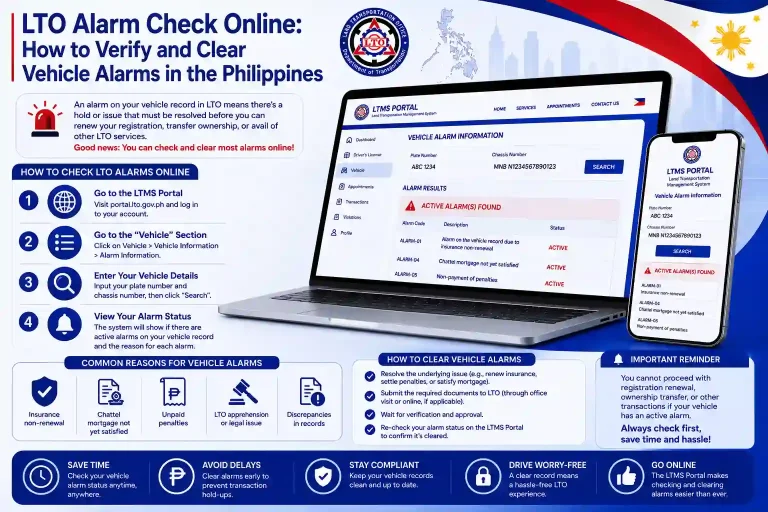
The lto online application for student permit process also includes access to study materials once you create an account. You’ll see a section called “Exam Reviewer” with sample questions you can practice.
Official LTO Resources
The best place to start is the LTMS Portal. After you create an account and book your appointment, you can access the theoretical driving course videos. These videos cover all the topics that appear on the exam. Watch them at least once before your test date.
The LTO also publishes a Driver’s Manual in PDF format. This manual contains traffic laws, sign definitions, and driving tips. You can download it for free from the LTO website or find copies on educational forums.
YouTube LTO Exam Reviewers
YouTube has dozens of channels dedicated to LTO exam preparation. These channels upload video lessons, practice tests, and question-and-answer sessions. Many are in Filipino with English subtitles.
Look for channels that post videos in 2024 or later. Traffic laws sometimes change, so older videos may contain outdated information. Check the upload date before you start watching.
Third-Party Practice Tests
Several websites offer free practice tests that mimic the format of the real exam. These tests give you 40 questions and show your score at the end. Some even explain why each answer is correct or wrong.
Take at least three full practice tests before your actual exam. This helps you get comfortable with the question style and identify weak areas. If you keep missing questions about road signs, for example, you know to spend more time reviewing that topic.
Mobile Apps for Exam Practice
You can also download mobile apps designed for LTO exam review. These apps let you study on your phone during commutes or breaks. Most apps include flashcards, quizzes, and progress tracking.
Popular apps include “LTO Exam Reviewer Philippines” and “Driver’s License Exam PH.” Both are free with optional paid upgrades for extra features. The free version is usually enough to pass the exam.
How to Pass the LTO Exam on Your First Try
To pass the LTO exam on your first attempt, you need to study the official reviewer materials, take at least three full-length practice tests, and focus extra time on traffic signs and right-of-way rules. Aim for a score of 35 or higher on practice tests so you have a buffer above the 30-question passing mark.
Preparation is the key. Most people who fail do so because they show up without studying or only review the night before. The exam covers a lot of information, and you need time to absorb it all.
Create a Study Schedule
Give yourself at least one week to prepare. Break your study time into daily sessions focused on one topic at a time. Here’s a sample schedule:
- Day 1: Watch all TDC videos on the LTMS Portal
- Day 2: Study traffic signs (regulatory, warning, guide)
- Day 3: Review right-of-way rules and intersection scenarios
- Day 4: Learn speed limits and traffic violations
- Day 5: Practice defensive driving questions
- Day 6: Take two full practice tests
- Day 7: Review wrong answers and retake weak sections
Spend 30 to 60 minutes each day. Short, focused sessions work better than cramming for hours the night before.
Focus on Your Weak Areas
After you take a practice test, look at the questions you got wrong. Don’t just move on. Study those topics again until you understand why the correct answer is right.
If you keep missing road sign questions, for example, make flashcards with images of each sign and quiz yourself. If right-of-way rules confuse you, draw diagrams of common intersections and practice who goes first.
Memorize Key Numbers and Rules
Some questions ask for specific numbers. You’ll need to memorize these:
- Passing score: 30 out of 40 (75%)
- Standard speed limit on open roads: 80 km/h
- Speed limit in residential areas: 20 km/h
- Safe following distance: 3 seconds
- Number of questions on the exam: 40
Write these numbers on a notecard and review them every day. Repetition helps you remember.
Take Practice Tests Under Real Conditions
When you take a practice test, simulate the real exam. Sit at a computer, set a 20-minute timer, and answer all 40 questions without checking notes or looking up answers. This builds your test-taking stamina and shows you how much you really know.
If you score below 30 on a practice test, you’re not ready. Keep studying and retake the practice test in a few days. Don’t schedule your real exam until you can consistently score 35 or higher on practice tests.
Pro Tip: Bring a printed copy of your practice test scores to your exam appointment. Reviewing them while waiting for your turn can boost your confidence and refresh key concepts.
What to Do on Exam Day
On the day of your exam, arrive at the LTO office at least 30 minutes early. Bring all required documents: your valid ID, application form, and medical certificate. If you’re missing any document, you won’t be allowed to take the test.
Stay calm. The test is straightforward if you prepared. Read each question carefully before selecting your answer. If you don’t know the answer, make your best guess and move on. Don’t spend too much time on one question.
After you submit your last answer, the system will show your score immediately. If you passed, congratulations. If you didn’t, you can schedule a retake.
What Are the Differences Between LTO Online Exam and CDE Exam?
The LTO online exam is the written test required for all driver’s license applicants, while the CDE (Comprehensive Driver’s Education) exam is a separate test specifically for professional driver applicants. The LTO exam focuses on basic traffic rules and signs, while the CDE exam covers advanced topics like commercial vehicle operation and passenger safety.
Here’s a side-by-side comparison:
| Feature | LTO Online Exam | CDE Exam |
|---|---|---|
| Purpose | Required for all driver’s licenses | Required for professional licenses only |
| Questions | 40 | 50 to 60 |
| Passing Score | 30/40 (75%) | 38/50 (76%) |
| Topics Covered | Basic traffic rules, signs, right-of-way | Commercial vehicle rules, cargo handling, passenger transport |
| Difficulty | Easier | Harder |
If you’re applying for a non-professional license to drive your personal vehicle, you only need to pass the LTO online exam. If you’re applying for a professional license to work as a taxi driver, bus driver, or truck driver, you must complete the CDE seminar and pass the CDE exam.
What Happens If You Need Both Exams?
Some applicants need to take both exams. For example, if you already have a non-professional license and want to upgrade to a professional license, you’ll need to pass the CDE exam even if you passed the LTO exam years ago.
The CDE exam includes more technical questions about vehicle maintenance, defensive driving in commercial situations, and legal responsibilities of professional drivers. It’s harder than the standard LTO exam, so you’ll need extra study time.
How to Access the LTO Portal Exam for Renewal of License
You can access the LTO portal exam for license renewal by logging into the LTMS Portal and booking an appointment at your chosen LTO office. In most cases, license renewal does not require retaking the written exam unless your license expired more than 10 years ago or you were flagged for violations.
Here’s how to check if you need to take the exam during renewal:
- Go to the LTO Renewal page on the LTMS Portal
- Log in with your account credentials
- Enter your license number and personal details
- Check the “Requirements” section for your renewal
If the system shows “Written Exam Required,” you’ll need to book an exam appointment. If it doesn’t, you can proceed with the standard renewal process without retaking the test.
Who Needs to Retake the Exam During Renewal?
You’ll need to retake the exam if:
- Your license expired more than 10 years ago
- You accumulated multiple traffic violations
- Your license was suspended or revoked
- You’re upgrading to a different license type (non-pro to pro)
The LTO uses the exam as a way to ensure drivers still know current traffic laws, especially if they haven’t driven legally in years. If you fall into one of these categories, study the same materials as first-time applicants.
Can You Renew Your License Without Going to the LTO Office?
Some LTO offices now offer renewal services at satellite locations like malls and government centers. You still need to appear in person, but you may have more convenient location options. Check the LTMS Portal for participating locations in your area.
Online-only renewal (no office visit) is not available if you need to retake the exam. You must complete the written test at an LTO office.
LTO Signs Exam: What You Need to Know
The LTO signs exam tests your ability to recognize and interpret traffic signs, including regulatory signs, warning signs, and guide signs. You’ll see images of signs and need to select the correct meaning or action from multiple-choice options. Signs make up about 40% of the total exam questions.
Most people find the signs section easier than right-of-way questions because you can study them visually. Create flashcards with images of each sign and practice until you can identify them instantly.
How to Study for the Signs Exam
Here’s a simple method to memorize traffic signs:
- Print or save images of all Philippine traffic signs
- Group them by type (regulatory, warning, guide)
- Study one group per day
- Test yourself without looking at the answers
- Focus extra time on signs you confuse
The most commonly confused signs are:
- Yield vs. Stop (both are red but have different shapes)
- No Entry vs. No Parking (both show prohibition)
- Curve Ahead vs. Turn Ahead (both warn about direction changes)
Pay attention to small details like color, shape, and symbols. A red circle with a line through it always means “prohibited.” A yellow diamond always means “warning.”
Common Sign Questions on the Exam
Here are examples of questions you’ll see:
- What does a red octagon with white letters mean? (Answer: Stop)
- What should you do when you see a yellow triangle with an exclamation mark? (Answer: Slow down and proceed with caution)
- What does a blue rectangle with a white “H” mean? (Answer: Hospital ahead)
If you can answer these types of questions quickly and correctly, you’ll do well on the signs portion of the exam.
LTO Driver’s License Exam Passing Score and Retake Policy
The passing score for the LTO driver’s license exam is 30 out of 40 questions, which equals 75%. If you score 29 or lower, you fail and must retake the exam. There’s no limit on how many times you can retake the test, but you’ll pay ₱100 each time.
When you fail, the LTO does not tell you which specific questions you got wrong. You’ll only see your total score. That’s why it’s important to study all topics thoroughly instead of guessing which ones might appear on the test.
What Happens If You Fail?
If you fail, you can schedule a retake immediately or come back another day. Some LTO offices allow same-day retakes if there’s space available. Others require you to book a new appointment through the LTMS Portal.
Each retake costs ₱100. This fee is separate from the student permit application fee. If you fail three times, you’ll have spent ₱300 on exams alone. That’s why studying properly before your first attempt saves time and money.
How Long Are Exam Results Valid?
Your passing score is valid for the duration of your student permit, which is 90 days. After you pass the written exam, you have three months to complete the practical driving test and apply for your full license.
If you don’t complete the process within 90 days, your student permit expires. You’ll need to start over, which means retaking the written exam and paying all fees again.
LTO Practical Driving Exam: What Comes After the Written Test
After you pass the LTO written exam and complete the theoretical driving course, you move on to the practical driving exam. This is a hands-on test where you demonstrate your ability to operate a vehicle safely on a closed course and in real traffic conditions.
The practical exam has two parts: the course test and the road test. The course test happens in a controlled area where you’ll need to perform specific maneuvers like parallel parking, three-point turns, and stopping on an incline. The road test happens on actual streets where an examiner watches how you handle real traffic.
How to Prepare for the Practical Driving Exam
You can’t take the practical exam until you have a valid student permit. Once you get your permit, practice driving with a licensed driver who has at least three years of experience. Many people hire professional driving instructors to help them prepare.
Practice these specific maneuvers because they’re tested on the course exam:
- Starting on an incline without rolling back
- Parallel parking between two cars
- Three-point turn in a narrow space
- Backing up in a straight line
- Stopping smoothly at a designated line
For the road test, practice defensive driving in busy areas. The examiner will watch how you handle intersections, pedestrian crossings, and merging into traffic. They’ll also check if you use mirrors and signals properly.
What Happens If You Fail the Practical Exam?
If you fail the practical driving exam, you can retake it. The LTO allows multiple attempts, but you’ll need to pay the exam fee again. Use the feedback from your first attempt to improve your weak areas before trying again.